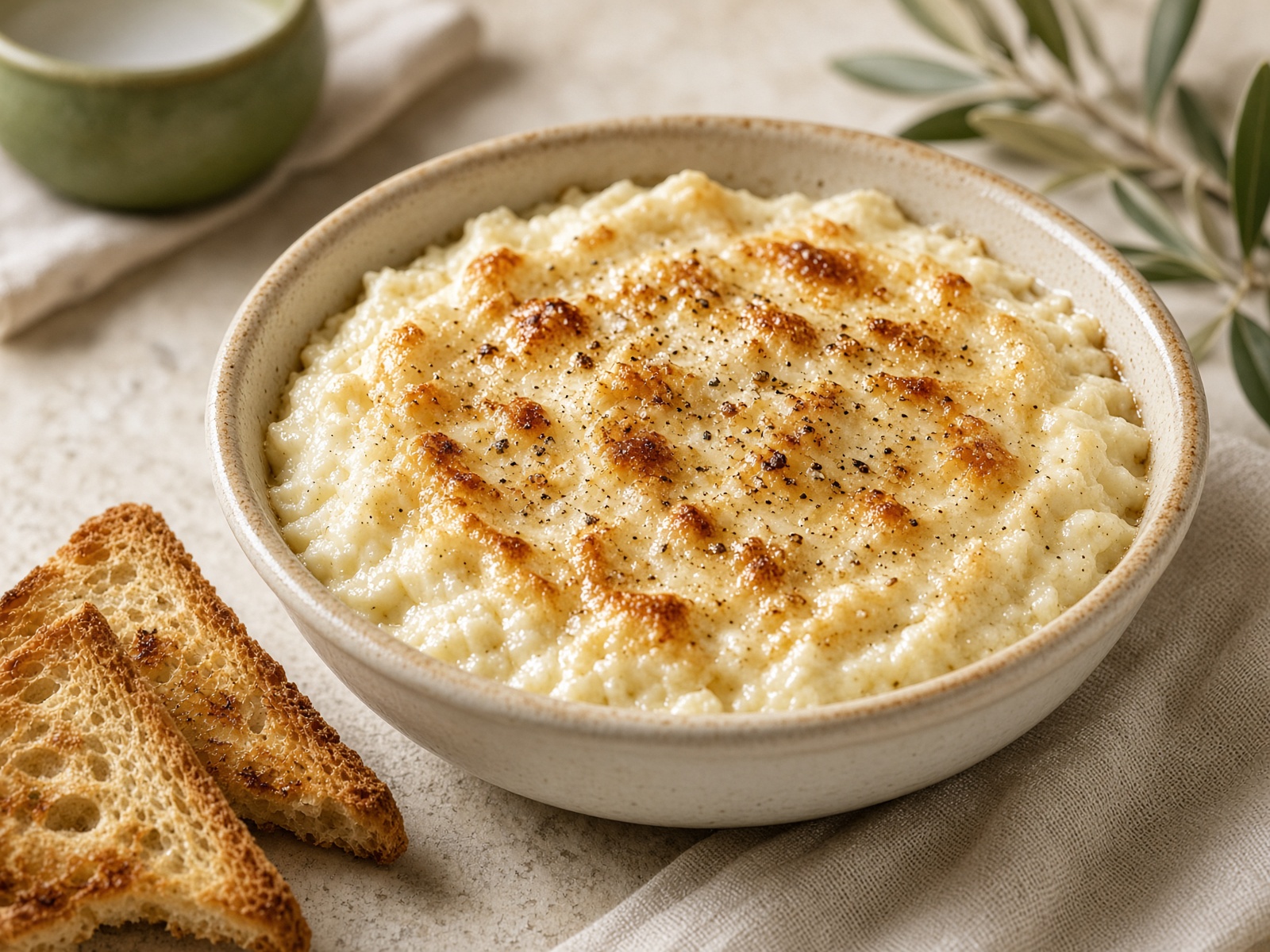
You want something ivory and garlicky, a ribbon of fish and fat, spooned warm onto toast. Salt cod beaten with olive oil and warm milk until it is almost a mayonnaise. Never cold from the refrigerator. Potatoes crept in later; they are omitted here, and you will not miss them.
Nîmes claims the original brandade — a Languedoc answer to the salt-cod trade that supplied the Mediterranean interior when fresh fish could not. The word means something stirred, and stirring is the whole method.
Keep the fish warm as you beat, add the oil in a thin stream, and stop when it holds a ribbon. Overworking makes it glue. A Picpoul de Pinet cuts the richness.
Method
- 01
Poach the soaked, well-drained salt cod in barely simmering water until it flakes at the touch of a fork, 8 to 10 minutes. Do not let the water boil, or the fish will seize and turn stringy. Drain it, pick out the skin and bones, and keep the flesh warm — a warm brandade emulsifies; a cold one will not. Flake it coarsely; you are not making a purée yet.
- 02
Warm the olive oil until it is just fragrant, not hot. In a pan over low heat, beat the fish with the crushed garlic, adding the oil in a thin stream as you would for a mayonnaise. Keep the mixture moving; it will look ragged at first, then suddenly come together into something ivory and glossy. The pan must stay warm; a cold emulsion is glue.
- 03
Loosen the mixture with the warm milk, a little at a time, until the brandade is creamy and holds a ribbon when you lift the spoon. Stop when it does; overworking makes it gluey. Season with white pepper, a grating of nutmeg, and lemon juice to taste. It should be garlicky, rich, and just sharp enough to keep you coming back.
- 04
Serve it warm, spooned onto toasted baguette, never cold from the refrigerator — the fat sets as it chills and the charm goes with it. Pile it generously; this is not a smear. The toast should be crisp enough to hold, the brandade still faintly steaming. That contrast of warm emulsion and crunch is the whole dish.