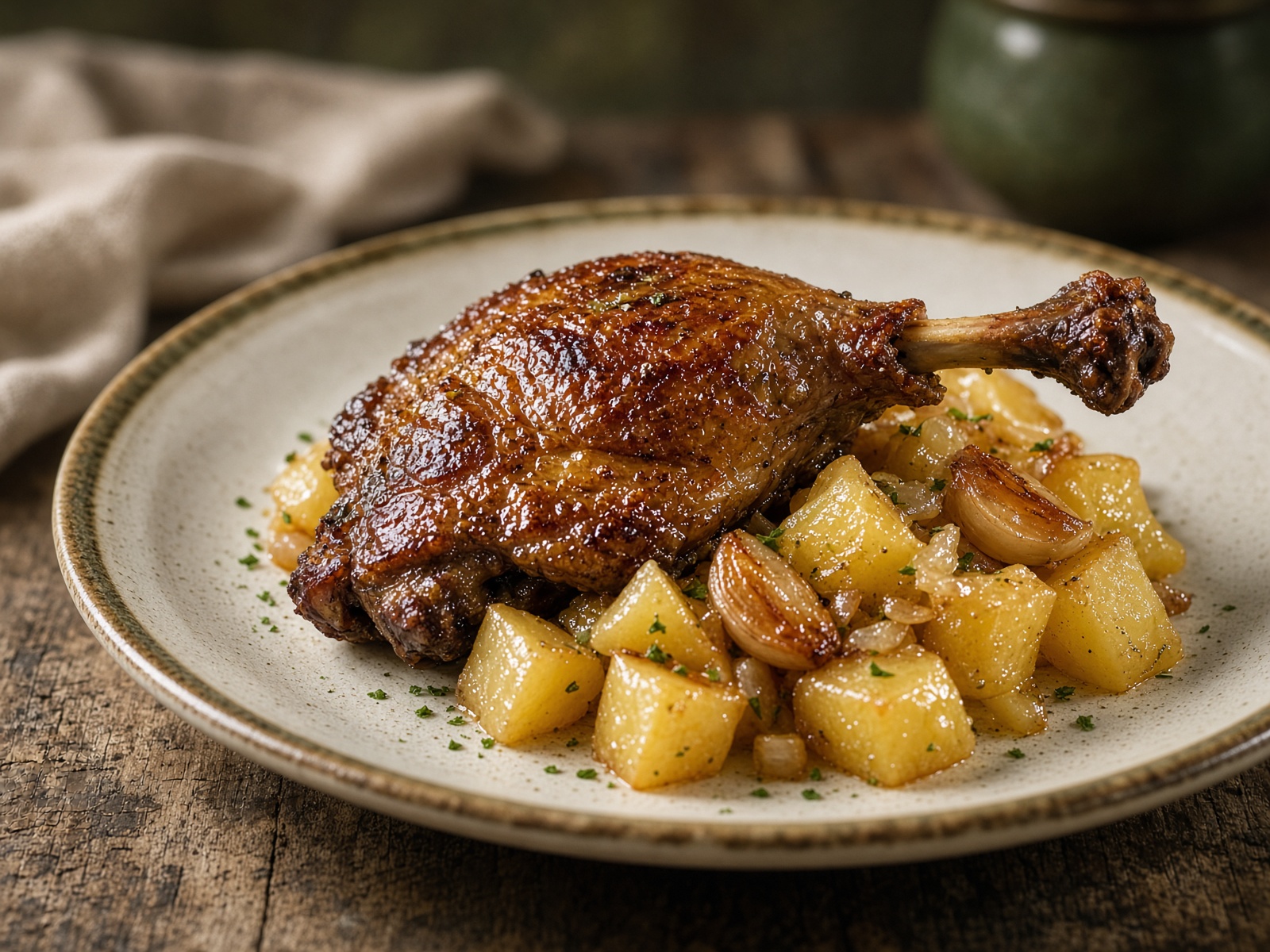
You salt duck legs overnight, then cook them in their own fat until the meat yields to a spoon. Later, in a hot pan, you crisp the skin until it shatters; the flesh beneath is silk. Potatoes fried in the same fat are the rest of the plate.
Gascony preserved duck this way to keep meat through winter; what was a larder technique is now the region's great luxury. The confit pot, sealed under fat, would last for months.
Do not rush the oven — 230°F, two hours at least, the fat barely trembling. Cool the legs in the fat. Crisp them skin-side down when you want them, and serve without apology. Madiran again.
Method
- 01
Rub the duck legs all over with the coarse salt, pepper, crushed garlic, thyme and crumbled bay, working it into the flesh and under the skin where you can. Cover and refrigerate for 12 to 24 hours. This is a cure, not a seasoning — it draws out moisture and seasons the meat to the bone. Don't skimp on the salt; timid curing gives you roast duck, not confit.
- 02
Rinse the salt from the legs thoroughly and pat them completely dry; any remaining brine will make the fat spit and the meat too salty. Lay them in a casserole and pour over the duck fat so they are fully submerged. They should sit in it like a secret. If a corner of skin pokes out, it will dry instead of confit.
- 03
Cook, uncovered, at 230°F until the meat is yielding and a skewer meets no resistance, 2 to 2½ hours. The fat should barely tremble; if it bubbles you are too hot and the meat will fry. Cool the legs in the fat. They will keep for days this way, which is the old point of the method, and they improve overnight.
- 04
To serve, lift the legs from the fat, wipe off the excess, and crisp them skin-side down in a hot pan until the skin shatters. Don't fuss with them; let the skin do its work. Serve with potatoes sautéed in the same fat, which is the rest of the plate. The flesh beneath should be silk.