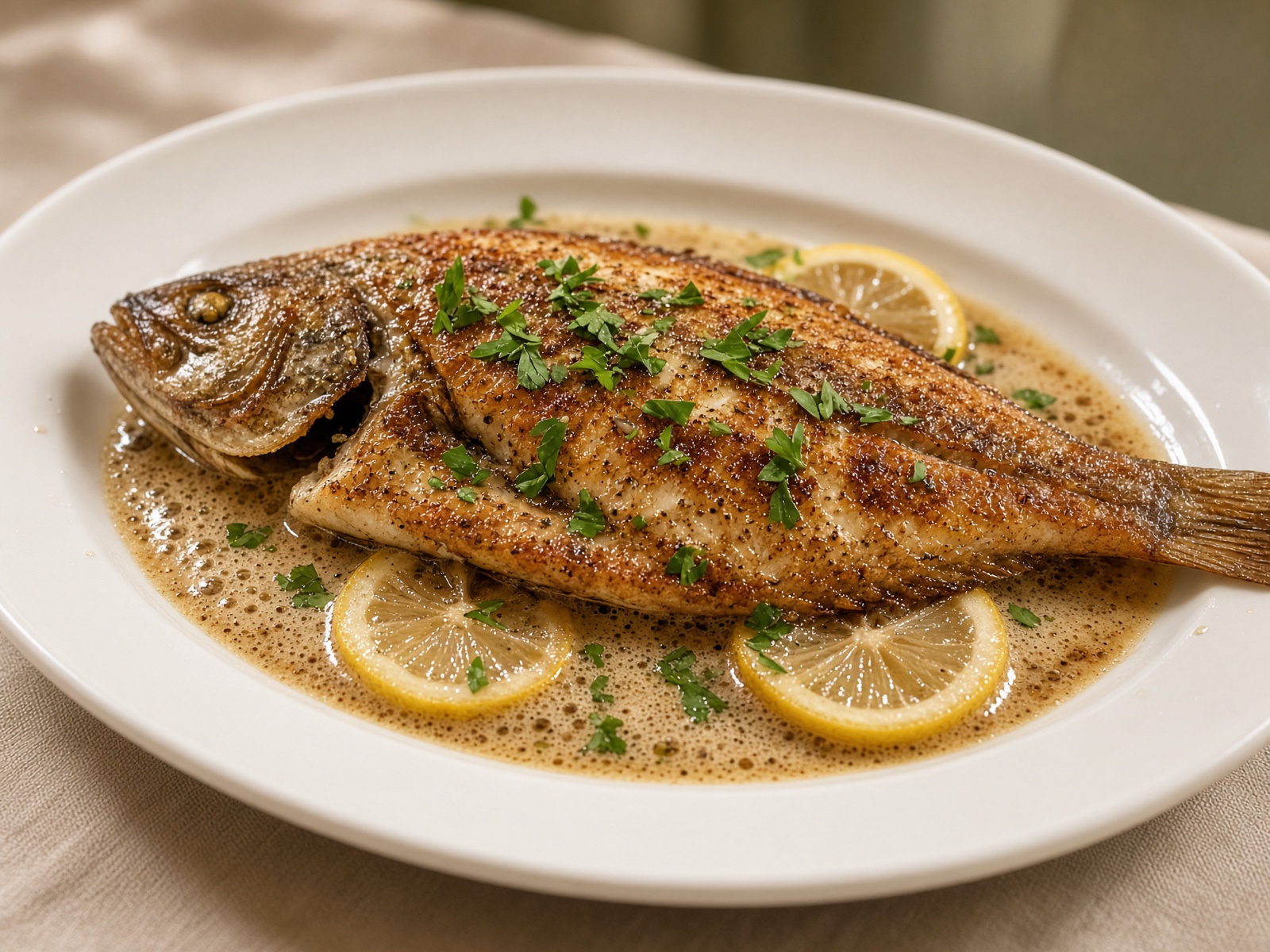
You flour a whole Dover sole and cook it in butter until the butter itself browns to noisette — nut-brown, smelling of hazelnut. Lemon and parsley finish it. The flesh should lift from the bone in clean flakes. Nothing to invent, nothing to improve.
Meunière means the miller's wife: she had flour, she had butter, she had a pan. The Channel supplied the sole; Parisian dining rooms made the dish canonical. The simplest of the great fish preparations, and the one that most often goes wrong.
Use real Dover sole if you can. Cook it in foaming butter, then make the noisette in a wiped pan and pour it over at once. Serve immediately. Chablis is the match.
Method
- 01
Season the sole on both sides with salt and pepper, then dredge it in flour, shaking off every bit of the excess. A thin, even veil is what you want; clumps of flour will fry into paste. Work just before you cook, so the coating stays dry. This is meunière: the miller's wife, flour, a pan, and nothing to hide behind.
- 02
Heat 3 tablespoons of the butter in a large pan until it is foaming and just beginning to smell sweet. Lay in the fish and cook 3 to 4 minutes a side, until the flesh is opaque at the bone and lifts in clean flakes. Don't fuss with it; let the crust form. Keep the sole warm on a plate while you make the butter.
- 03
Wipe the pan clean — leftover flour would burn and bitter the butter — and add the remaining butter. Cook it to noisette: nut-brown, foaming, and smelling distinctly of hazelnut. Watch it; the line between noisette and burnt is a matter of seconds. When it smells of toasted nuts and the milk solids have gone brown, you are there.
- 04
Squeeze in the lemon juice — it will hiss and stop the cooking — and add the chopped parsley. Pour this roaring butter over the fish at once. Serve immediately; a sole meunière that waits is a sole meunière that has died. The flesh should lift from the bone in clean flakes.