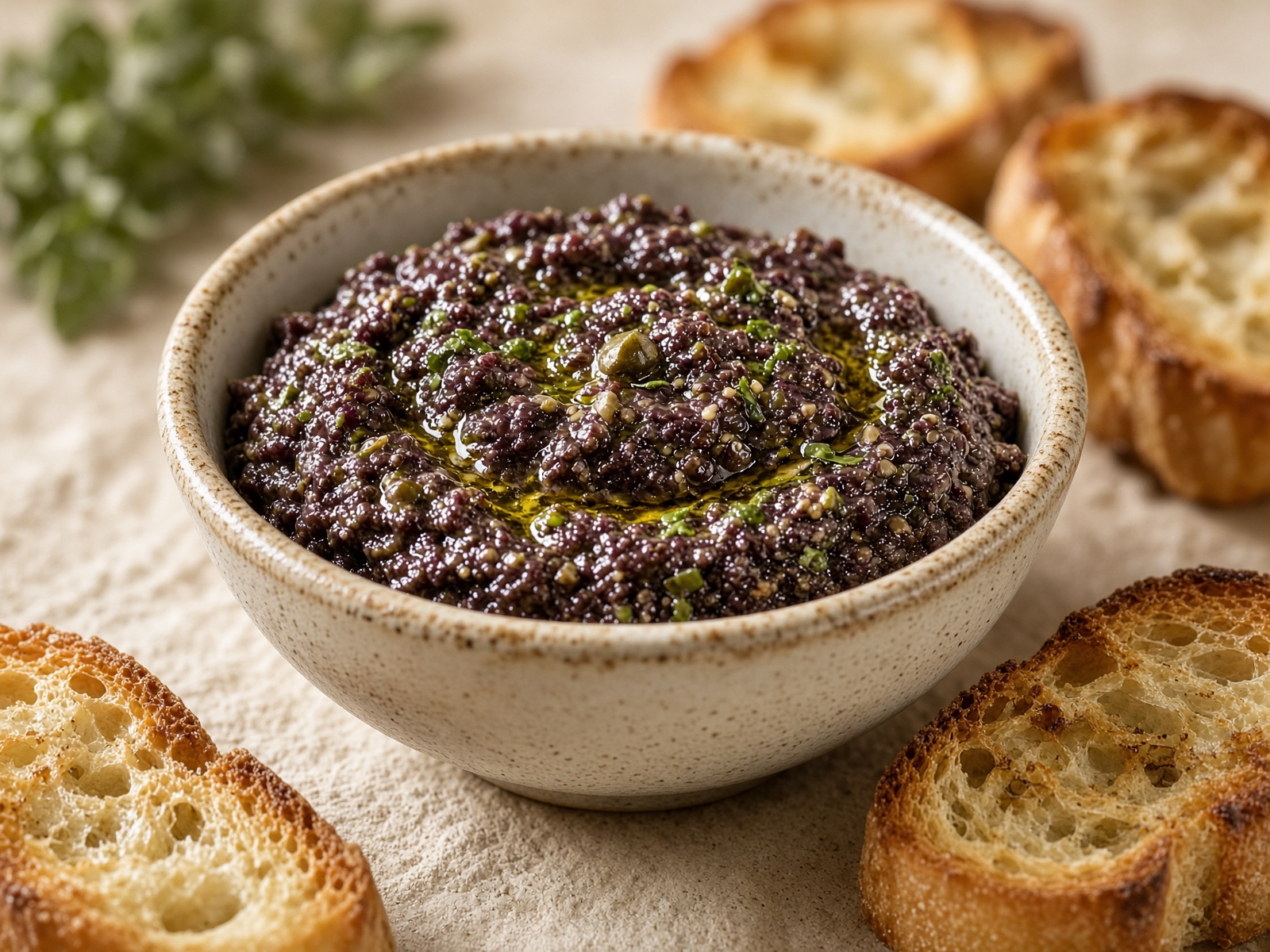
This is the paste you put on toast before anyone sits down: olives, anchovy and capers, worked with oil until it spreads but does not slump. Coarse, almost black. Salt, thyme and a thread of lemon. Not a bowl with sticks.
The name comes from tapéno, the Provençal word for caper, though the olives do the heavier work. It is a dish of the Midi — Nyons fruit, the anchovies of the coast — put on the table with the first glass of rosé.
Pound it in a mortar if you can; a processor makes it too smooth. Rest half an hour so the garlic settles, then eat it on baguette toasted enough to hold. That contrast of salt paste and warm bread is the whole point.
Method
- 01
Pound the olives, capers, anchovies and garlic in a mortar to a coarse paste — you want texture, not a purée. A processor will do if you pulse it, but stop before it turns smooth and sullen; the old paste should still show the olive. The garlic will seem fierce at first. It will settle.
- 02
Work in the oil in a thin stream, as you would for a mayonnaise, until the paste is spreadable but not slack. It should hold a ridge when you draw a spoon through it, and shine without looking oily. If it slumps, stop; you have enough. Taste as you go — the salt is already in the olives and the anchovies.
- 03
Season with the thyme, lemon juice and a grinding of pepper. The lemon is there to lift, not to shout; add it gradually and taste. Rest the tapenade 30 minutes so the flavors settle and the garlic loses its raw edge. Cover it, or it will dull on the surface.
- 04
Toast the baguette until it is crisp enough to hold the paste without going limp. Spread the tapenade generously — this is not a smear — and bring it to the table. Eat it while the toast still crackles. That contrast of salt paste and warm bread is the whole point.