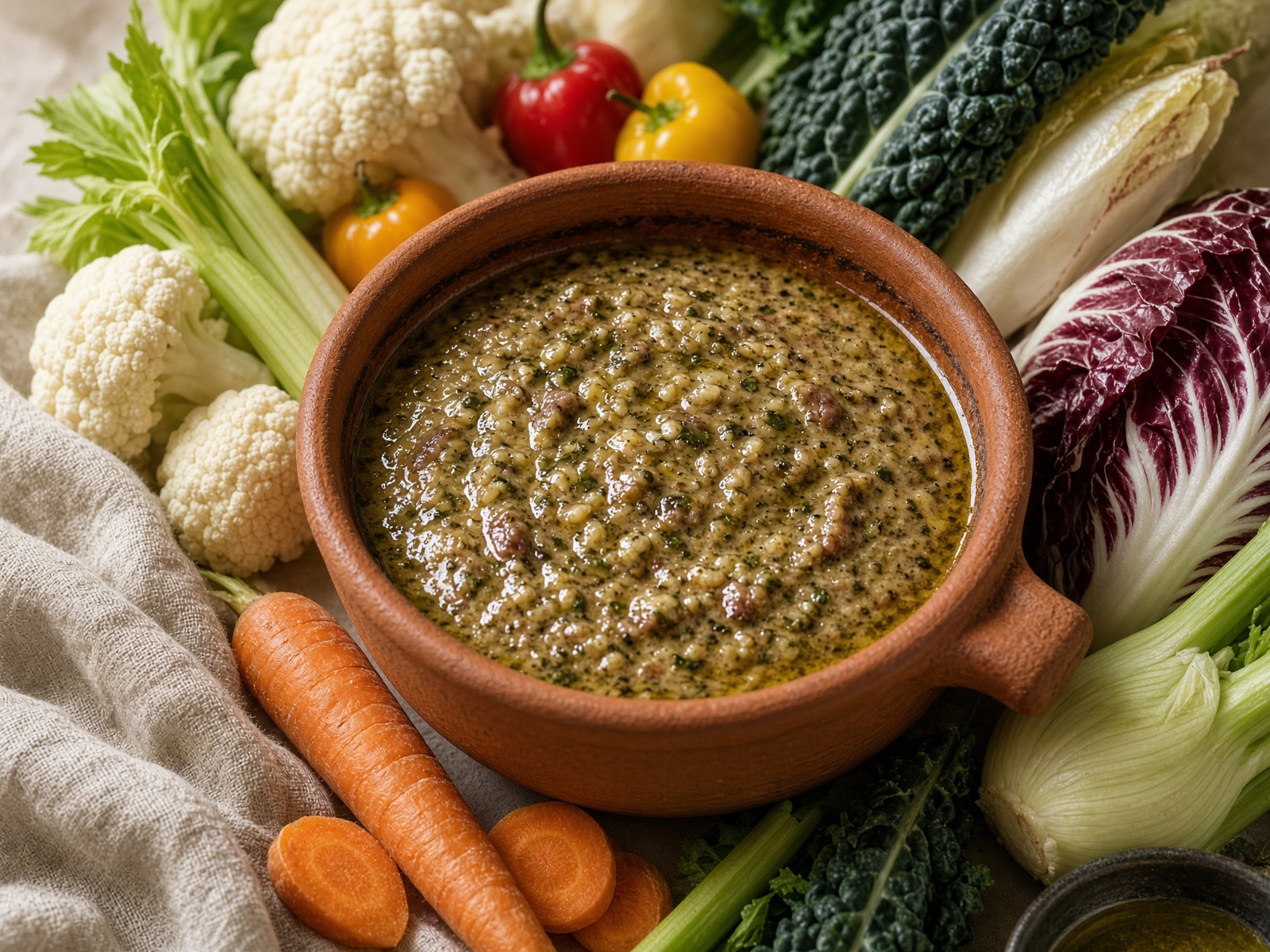
You dip raw vegetables — cardoon if you have it, fennel and pepper if you don't — into a pot of warm garlic and anchovy, kept over a flame. The oil is the sauce. Bread waits for what remains, and those last swipes of the pot are the prize.
Piedmont's autumn rite, eaten in the Langhe and Monferrato when the harvest is in and the new wine is open. Bagna càuda means hot bath. It is a communal dish, taken in quantity, with people you do not mind breathing on.
Blanch the garlic in milk so it sweetens. Keep the emulsion over a candle. There will be leftovers on nobody's plate.
Method
- 01
Put the garlic cloves in a small saucepan with the milk and simmer them gently until they are quite soft, about fifteen minutes. The milk sweetens the garlic and takes away its raw bite, which is what you want in a dip this rich. Drain the cloves well; you can discard the milk. They should mash under a fork with no resistance.
- 02
In a small, heavy pot over the lowest heat you have, mash the soft garlic with the anchovy fillets, stirring and pressing until they melt together into a paste. Take your time; the anchovies should disappear into the garlic rather than sit in pieces. The smell will be forthright — that is the point of a hot bath. Keep the heat shy, or the garlic will scorch and turn bitter.
- 03
Beat in the oil a little at a time, then the butter, until you have a warm, pourable emulsion the color of old gold. It should look creamy, not split; if it threatens to separate, take it off the heat and whisk hard. Keep the pot over a candle or a bain-marie so it stays warm without cooking further. This is a bath, not a sauce to be reduced.
- 04
Set the pot in the middle of the table with the raw vegetables around it — cardoon if you can find it, otherwise fennel, pepper, and cabbage. Everyone dips. When the vegetables are gone, bring out the bread and wipe the pot clean; those last swipes of garlic and anchovy are the prize. There will be leftovers on nobody's plate, and that is as it should be.