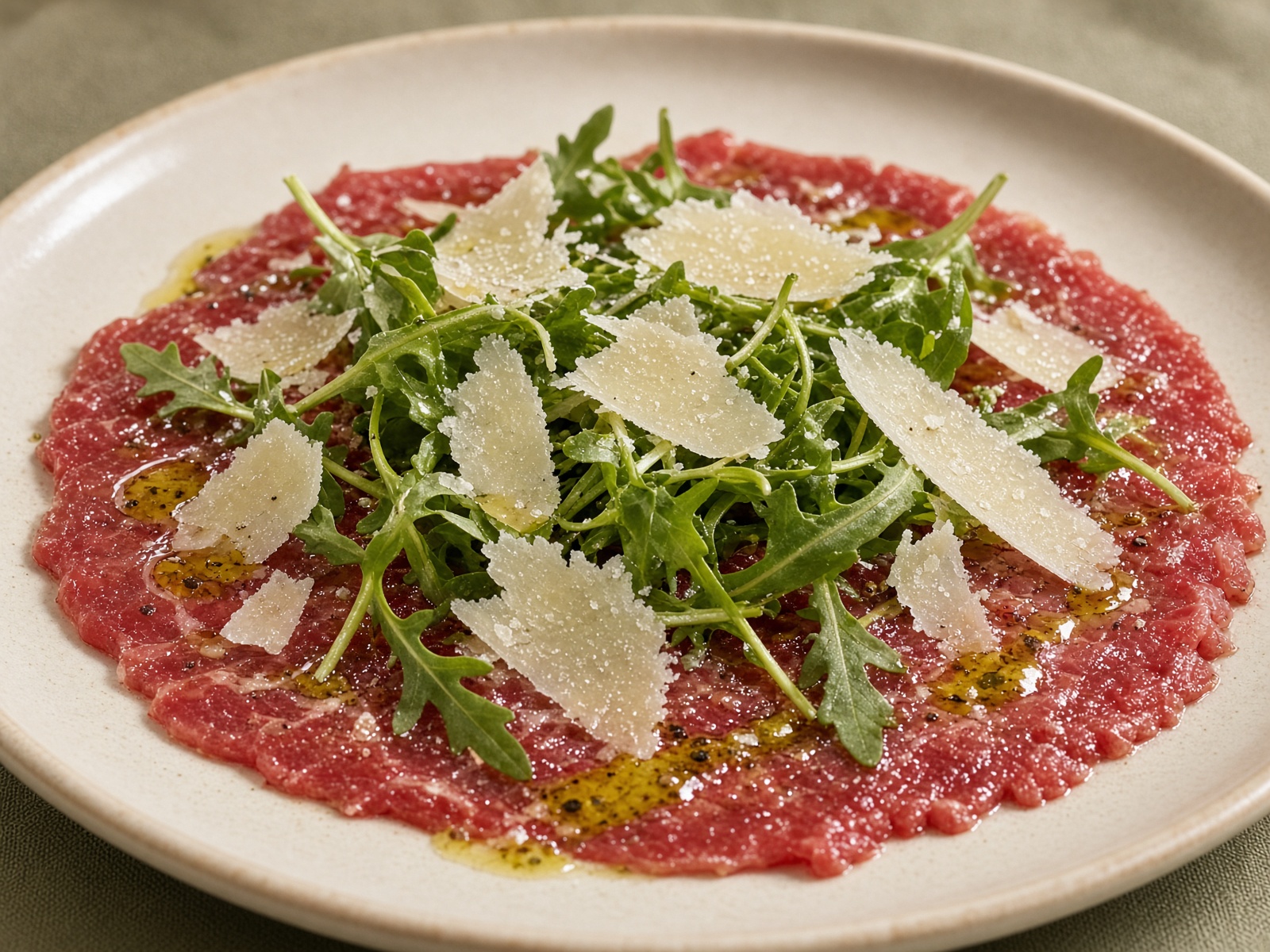
You beat raw beef to translucence and lay it on a cold plate, then dress it with oil, lemon and shavings of Parmigiano. A few leaves of arugula if you must. The meat is sweeter for the chill, and you eat it at once.
Giuseppe Cipriani made it at Harry's Bar in Venice in 1950 for a countess who could not eat cooked meat, and named it for Vittore Carpaccio, whose reds were hanging in a show that year. The dressing has always been little more than oil and acid.
Use tenderloin, very fresh, chilled until firm. Slice, then pound. No mustard cream, no truffle oil. Salt, pepper, cheese — that is all.
Method
- 01
Chill the tenderloin until it is quite firm — twenty minutes in the freezer will do if your refrigerator is timid. With a sharp knife, slice it as thinly as you can, then lay the slices between sheets of parchment and pound them gently with a rolling pin until they are translucent. You should almost be able to read through them. Work quickly so the meat stays cold.
- 02
Have your plates already cold — a few minutes in the refrigerator is enough. Lay the beef on them in overlapping slices, covering the surface without piling. The meat should look like a thin red lake. If a slice tears, just tuck it under its neighbor; nobody will know, and you mustn't fuss.
- 03
Spoon the oil over the beef in a thin, even sheet, then squeeze the lemon on top so the dressing is bright rather than heavy. A good pinch of flaky salt and a grind of pepper — the meat is raw and needs seasoning, so don't be timid. Taste a scrap; it should be silky, lemony, and clearly beef. That is all the dressing this plate wants.
- 04
Shave the Parmesan with a vegetable peeler so you get wide, paper-thin curls, and let them fall over the beef. A few leaves of arugula, if you like — they add a peppery bite, but they are optional, not required. Serve at once, while the plate is still cold and the meat is sweet. This is not a dish that improves in the waiting.