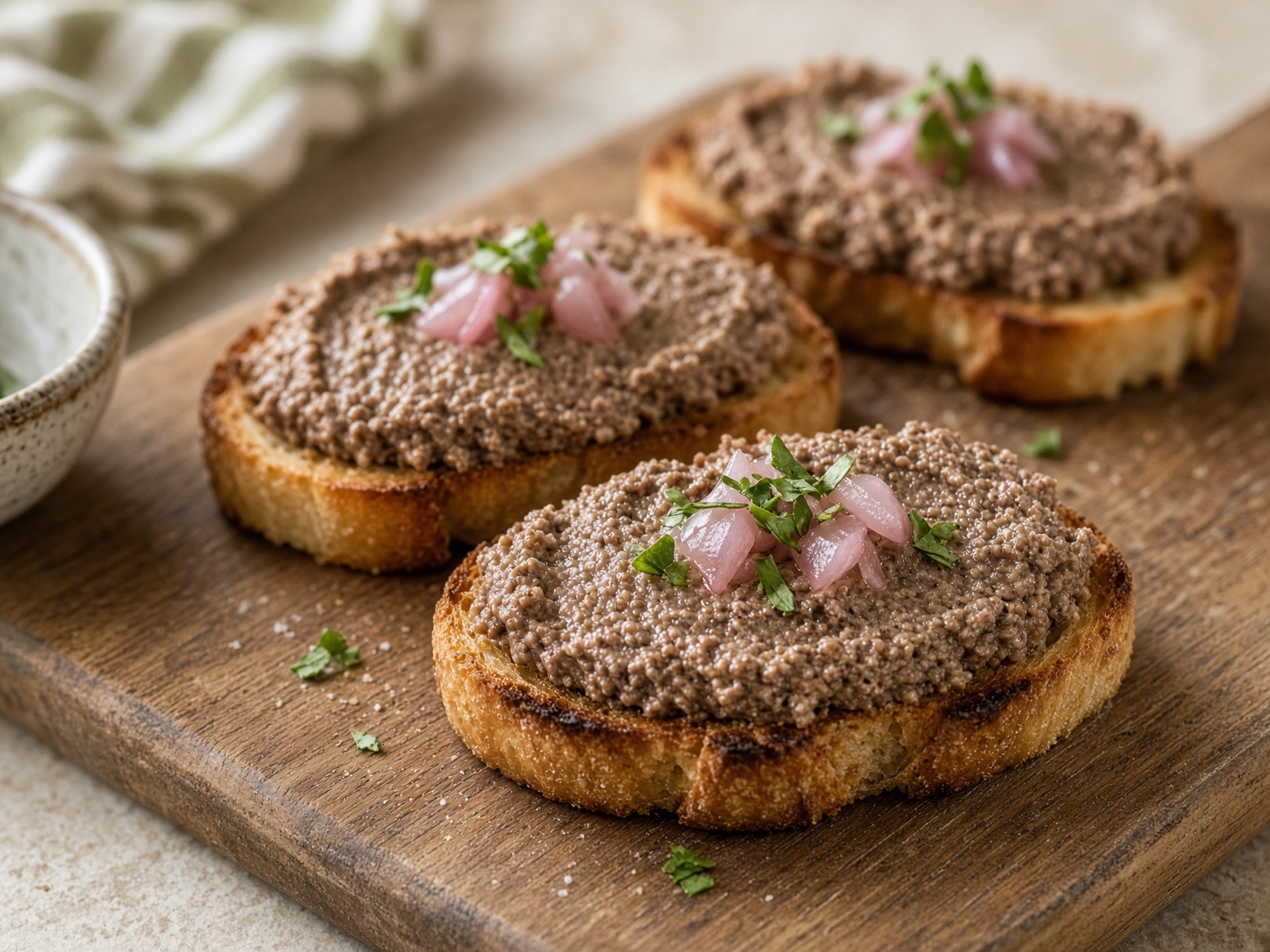
You want warm chicken-liver pâté, coarse, the colour of terracotta, spread thick on unsalted Tuscan toast while both are still hot. Vin santo, capers and anchovy are in it; you taste them as depth, not as a list. That contrast of crackle and coarse richness is the whole antipasto.
This, not oil on bread, is the true beginning of a meal in Florence and the Chianti. The bread is sciocco — made without salt — so you can season the livers as they should be. Every trattoria has a version; none of them are smooth.
Chop, do not purée. Serve warm, with Chianti if you have it. This is not a thing to make ahead and refrigerate.
Method
- 01
Melt the butter with the oil in a skillet and soften the shallot until it is pale and sweet, a few minutes, without letting it color. Add the trimmed livers and brown them on all sides — you want a little crust, not a grey stew. They should still feel springy when you press them. Don't crowd the pan or they will steam.
- 02
Tumble in the anchovy fillets and capers, then pour in the vin santo. Let it bubble and reduce until the liquid is a shiny glaze and the livers are just pink at the center when you cut one open. Overcooked liver is a crime against the bird; pull the pan off the moment they yield. The wine, capers, and anchovy should taste like depth, not like a list.
- 03
Tip the livers onto a board and chop them finely with a knife, or pulse once or twice in a processor — once, not into a purée. You want a coarse pâté the color of terracotta, with little pieces you can still see. A smooth paste is a different dish, and a lesser one. Taste for salt and pepper; the bread is unsalted, so the livers must be seasoned as they should be.
- 04
Toast the Tuscan bread until the edges crisp and the middle still has a little give. Spread the warm pâté on thickly, while both bread and livers are still hot — that contrast of crackle and coarse richness is the whole antipasto. Serve at once, with Chianti if you have it. This is not a thing to make ahead and refrigerate.