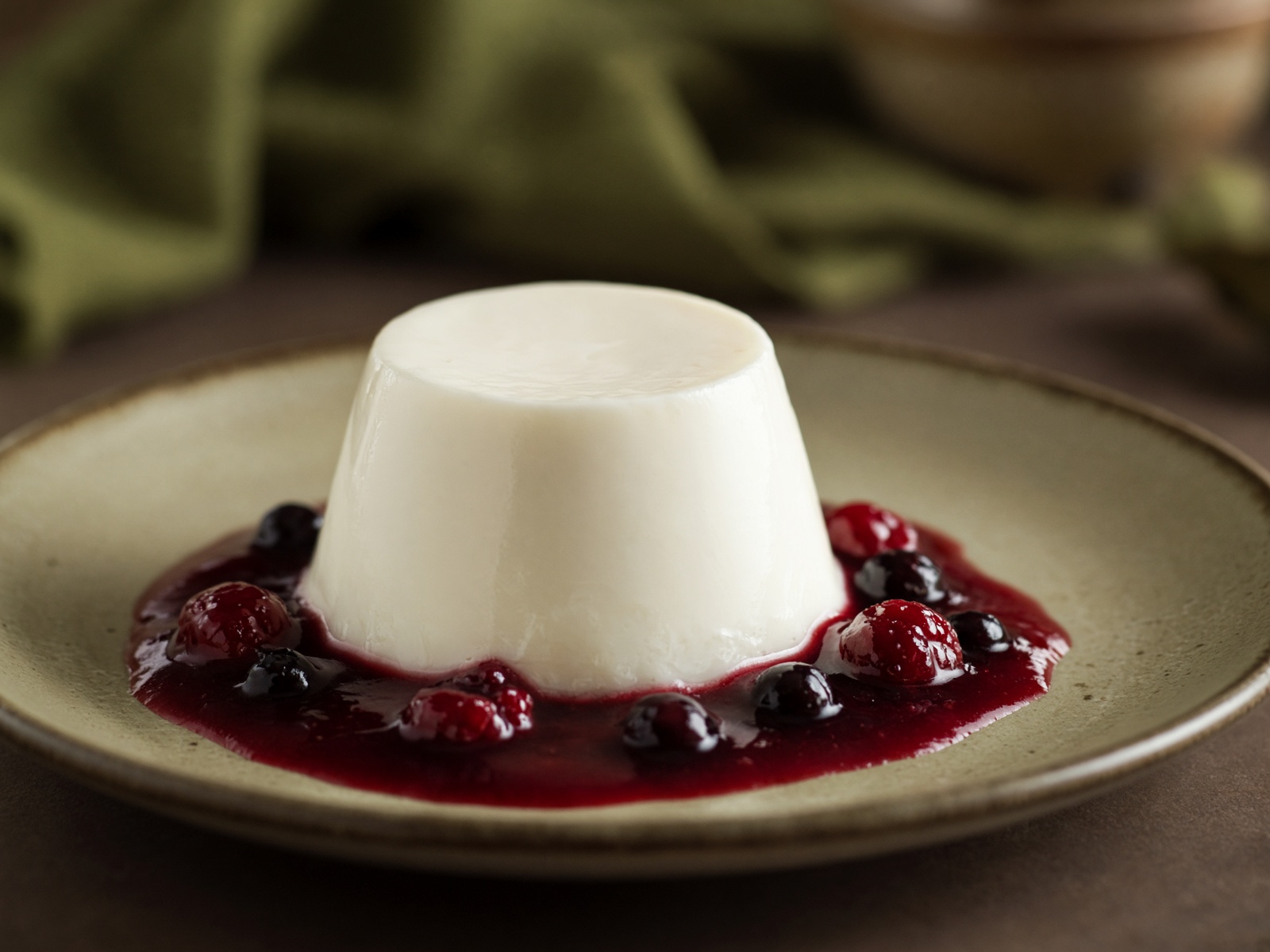
You unmould a trembling disc of cooked cream, barely set, vanilla in the scent. It should shiver when the plate moves. The colour is ivory. A berry sauce beside it is permitted; caramel is a different dessert.
Piedmont, the Langhe — cream, sugar, and enough gelatin to hold and no more. The name is literal: cooked cream. It became a household pudding from the restaurant table, and it suffers more from too much gelatin than from any other crime.
Warm the cream; do not boil. Unmould with a brief dip in hot water. If it stands like a rubber, you have made something else.
Method
- 01
Soak the gelatin leaves in a bowl of cold water until they are floppy and translucent. Meanwhile, warm the cream with the sugar and the split vanilla bean until the sugar dissolves and the cream smells of vanilla — do not let it boil, or you will have a skin and a sulky pudding. Stir now and then. You want it hot to the finger, not bubbling.
- 02
Lift the gelatin from the water, squeeze it firmly in your hand, and stir it into the warm cream until it has completely melted and vanished. Strain the mixture into moulds, fishing out the vanilla bean as you go. Work while the cream is still warm so the gelatin dissolves fully. A few bubbles on the surface will settle; don't fuss.
- 03
Cover the moulds and chill them for at least four hours, until the cream is barely set — it should tremble when you nudge the mould, not sit like a rubber. Too much gelatin is the usual crime, but you have used the right amount, so trust the clock. Overnight is even better. Don't unmould until you are ready to serve.
- 04
Dip each mould briefly in hot water — a few seconds, no more — and invert onto a plate; the disc should shiver as it lands. Crush the berries with the lemon juice and a spoon of sugar until you have a rough, bright sauce, and spoon it beside, not over. If the panna cotta stands like a rubber, you have made something else. Ivory, trembling, vanilla in the scent: that is the dish.