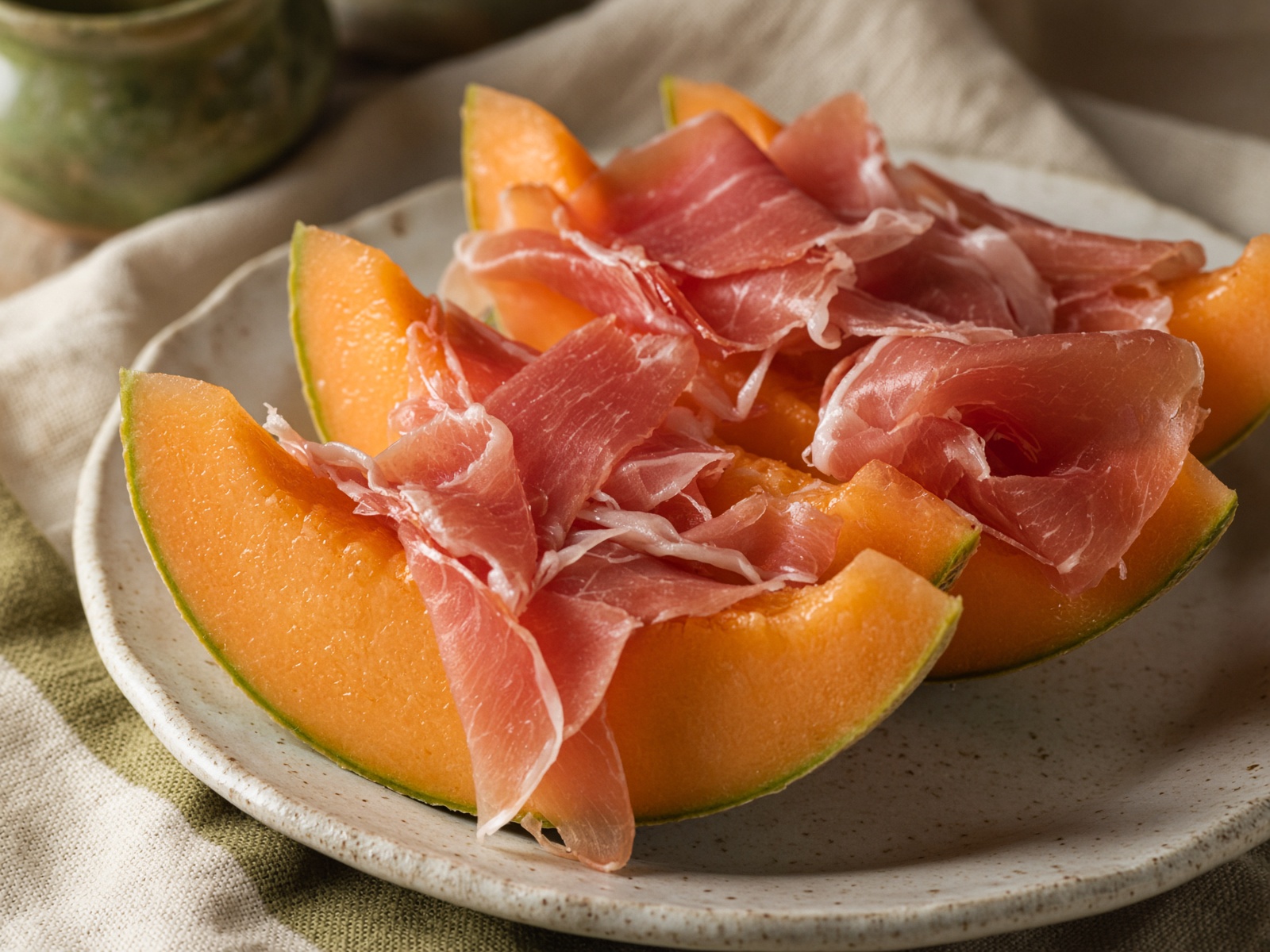
You drape a few slices of Prosciutto di Parma — silk and salt — over a wedge of melon that actually tastes of melon. Cold fruit, warm ham: that contrast is the entire pleasure. If the melon doesn't drip, you have no dish.
Emilia-Romagna's summer assembly: Parma's air-cured ham against a cantaloupe that has seen the sun. You are judging two ingredients, not following a recipe. Slice the ham thin enough to drape.
Chill the fruit; keep the ham at cool room temperature so it stays silky. A grind of pepper if you must. Get it to the table before the salt draws the juice.
Method
- 01
Chill the melon thoroughly so it will be cold and dripping when you cut it. Leave the ham at cool room temperature — refrigerator-cold prosciutto is stiff and mute, and you want it silky enough to drape. Give the ham ten minutes on the counter if it has been in the cold. Two temperatures on one plate is the whole trick of this assembly.
- 02
Halve the cantaloupe, scoop out the seeds with a spoon, and cut it into wedges, leaving the skin on so each piece has a handle. The fruit should drip a little on the board — if it doesn't, it isn't ripe enough and there is no dish. Taste a scrap; it must actually taste of melon. Pat the cut faces lightly if they are swimming, but don't dry them.
- 03
Drape a slice or two of ham over each wedge so the silk of the prosciutto falls in folds over the cold fruit. Don't wrap it like a parcel; let it hang. The salt of the ham against the sweetness of the melon is the entire recipe, so give each wedge enough ham to matter. Work quickly, before the salt starts drawing the juice.
- 04
A grind of black pepper is permitted if you must, but it is not required — the ham has already done the seasoning. Get the plate to the table at once, before the salt draws the melon dry and the ham weeps. Eat it with your fingers if the company will allow. There is nothing else on this plate, and there shouldn't be.