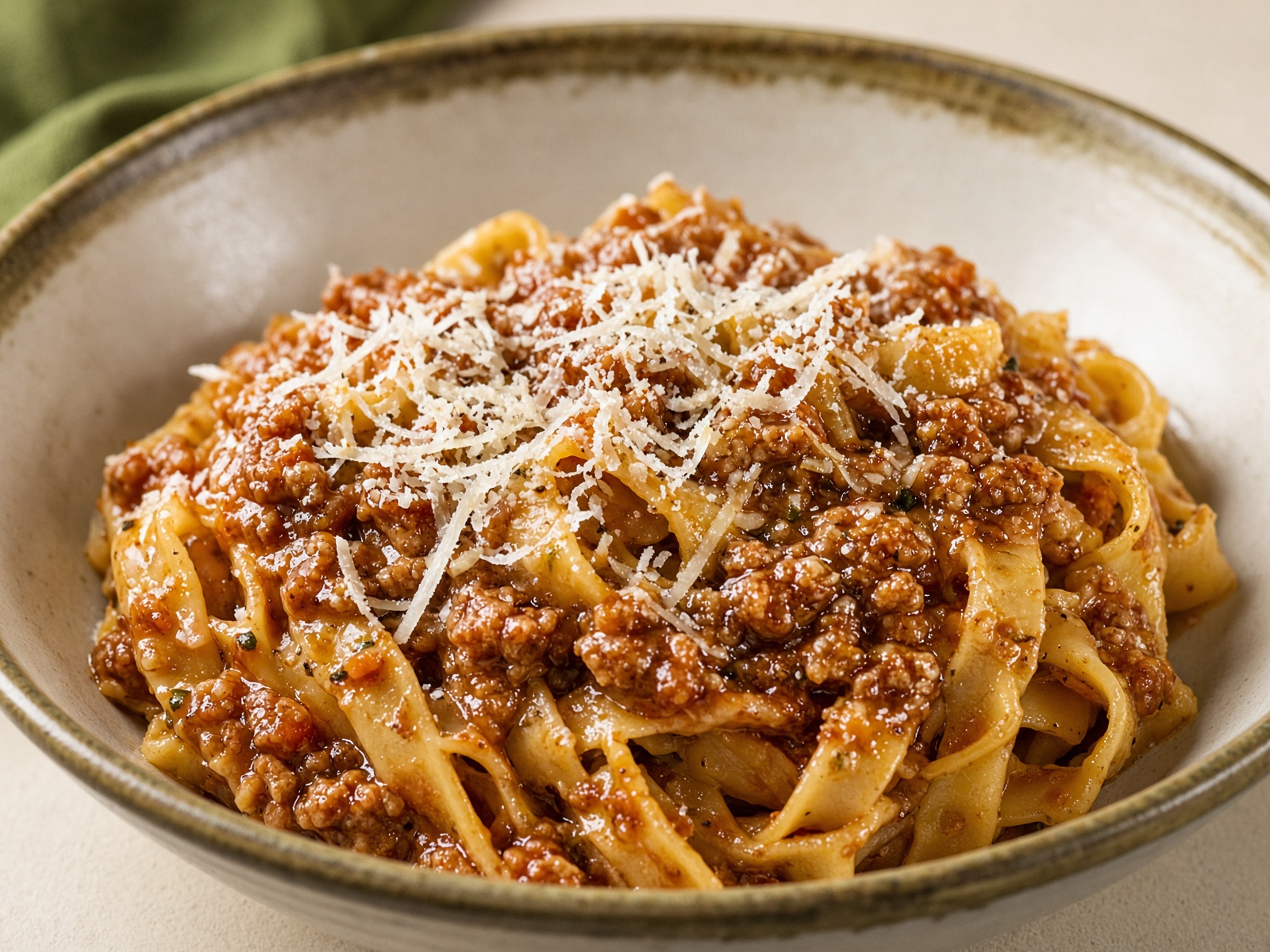
You coat fresh tagliatelle — you do not drown it — in a ragù of mixed meats, soffritto, wine, a little tomato, and milk. The sauce is brown-red, long-cooked, clinging to the ribbons. Parmesan at the table, a shower not a blanket, so the ragù still shows.
This is the ragù of Bologna, not the 'Bolognese' the world poured over spaghetti. The Accademia deposited a recipe in 1982: minced beef and pork, pancetta, soffritto, white wine, tomato in modest quantity, milk. It coats tagliatelle. It does not sit in a puddle.
Simmer very gently for two hours at least. Toss with the pasta and a splash of cooking water. Spaghetti is a different dinner.
Method
- 01
Warm the oil in a heavy pot and add the minced onion, carrot, celery, and pancetta. Sweat them slowly until they are sweet and the pancetta has given up its fat, a good fifteen minutes — don't rush, this is the foundation. Add the beef and pork, breaking them up, and brown them until no pink remains. Grey is not brown; give it the time it needs.
- 02
Pour in the wine and cook until it has almost vanished and the pan smells round, not sharp. Add the passata and a pinch of salt, then simmer very gently for two hours at least, with the occasional lazy bubble. Stir in the milk during the last hour; it sweetens the meat and takes the edge off the tomato. The sauce should be brown-red and clinging, not a puddle.
- 03
Cook the fresh tagliatelle in well-salted water until just al dente — fresh pasta takes only a few minutes, so stay with the pot. Lift it into the ragù with a splash of the cooking water and toss until every ribbon is coated, not drowned. This is the ragù of Bologna; it clings. Spaghetti is a different dinner, and you are not making that.
- 04
Bring the Parmigiano to the table and let everyone grate their own — a shower, not a blanket, so the ragù still shows. Taste a forkful before you add more; the sauce is already rich with meat and milk. Serve at once, while the pasta is still glossy. A modest tangle is a serving, however much you may want a second.