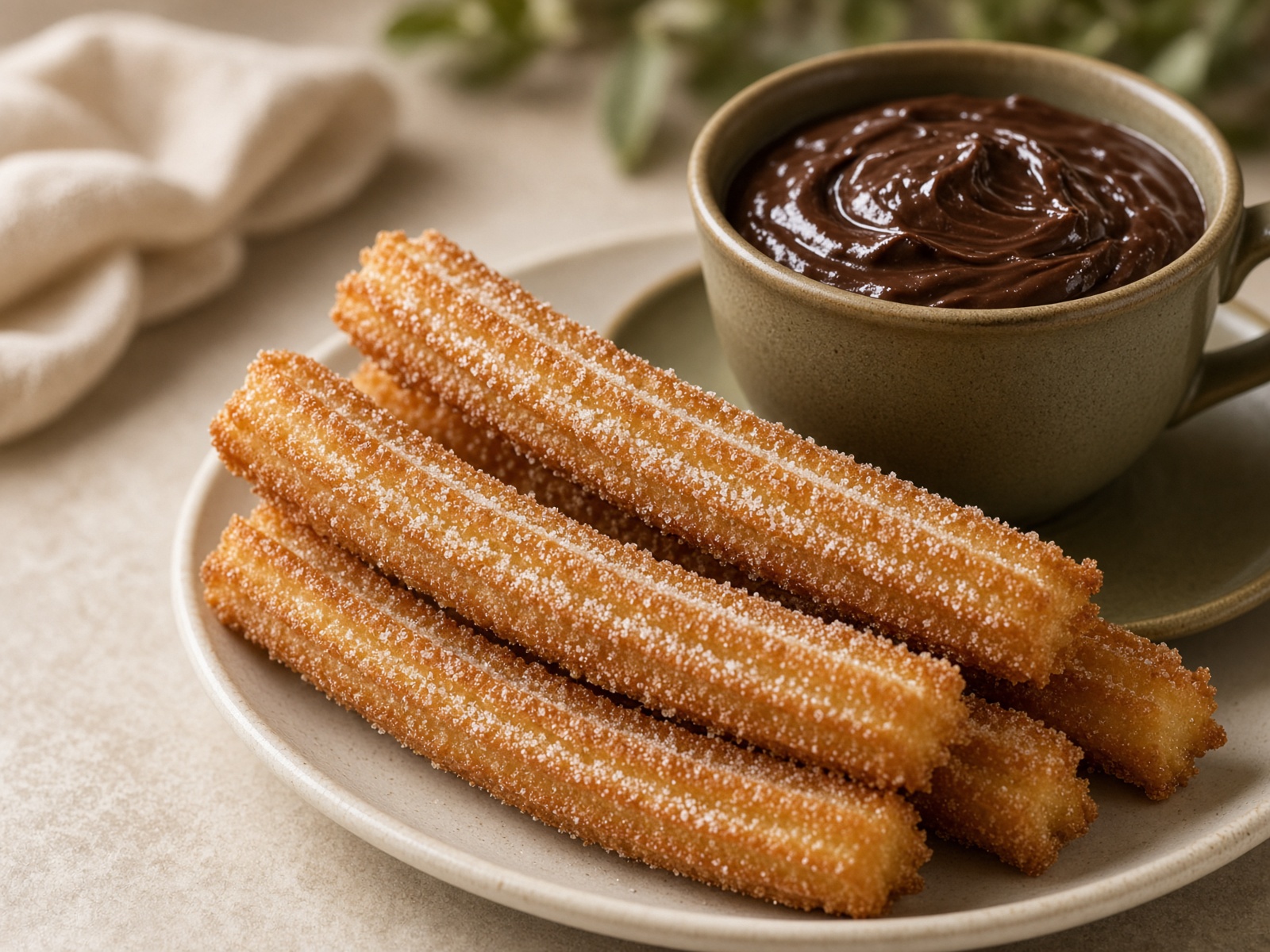
Ridged dough fried until hollow-crisp, then dragged through a chocolate so thick a churro stands in it. Sugar on the ridges is not negotiable. They arrive in a pile, still ticking with oil. You eat them at once. They do not wait.
The churrería is a Spanish institution, from Madrid's all-night counters to the stall at the fiesta. The dough is little more than water, flour and a little fat, piped through a star nozzle; the chocolate is drinking chocolate, not a dipping sauce in the French sense — cornstarch-thick, almost a pudding.
A small glass of Pedro Ximénez if it is afternoon; the chocolate alone if it is morning. Don't let them cool; a stale churro is just fried dough.
Method
- 01
Bring the water, butter, a tablespoon of sugar, and the salt to a boil. Off the heat, beat in the flour all at once until the dough comes away from the pan in a smooth mass. Beat in the egg if you're using it, for a richer dough, then cool slightly and spoon it into a star-nozzle piping bag. Those ridges catch the sugar; they're not decoration.
- 02
Heat the oil to 350°F and pipe 5-inch lengths directly into the oil, cutting them off with scissors; fry until deep gold, turning once, about 3 minutes. They should be hollow-crisp, not greasy. Drain on paper and toss in sugar while they're still hot, so it sticks to the ridges; work in batches, because they don't wait.
- 03
For the chocolate, melt the chopped chocolate in the milk over low heat, stirring until smooth. Stir the cornstarch with a spoonful of cold milk, then whisk it into the pan. Simmer until the chocolate thickly coats a spoon — it should be almost a pudding, thick enough that a churro stands in it. This is drinking chocolate, not a French dipping sauce.
- 04
Serve the churros at once, in a pile, still ticking with oil, with cups of the hot chocolate alongside. Drag, dunk, eat. They are breakfast of the night shift and of the fairground, and they go stale in minutes. A small glass of Pedro Ximénez if it's afternoon; the chocolate alone if it's morning.