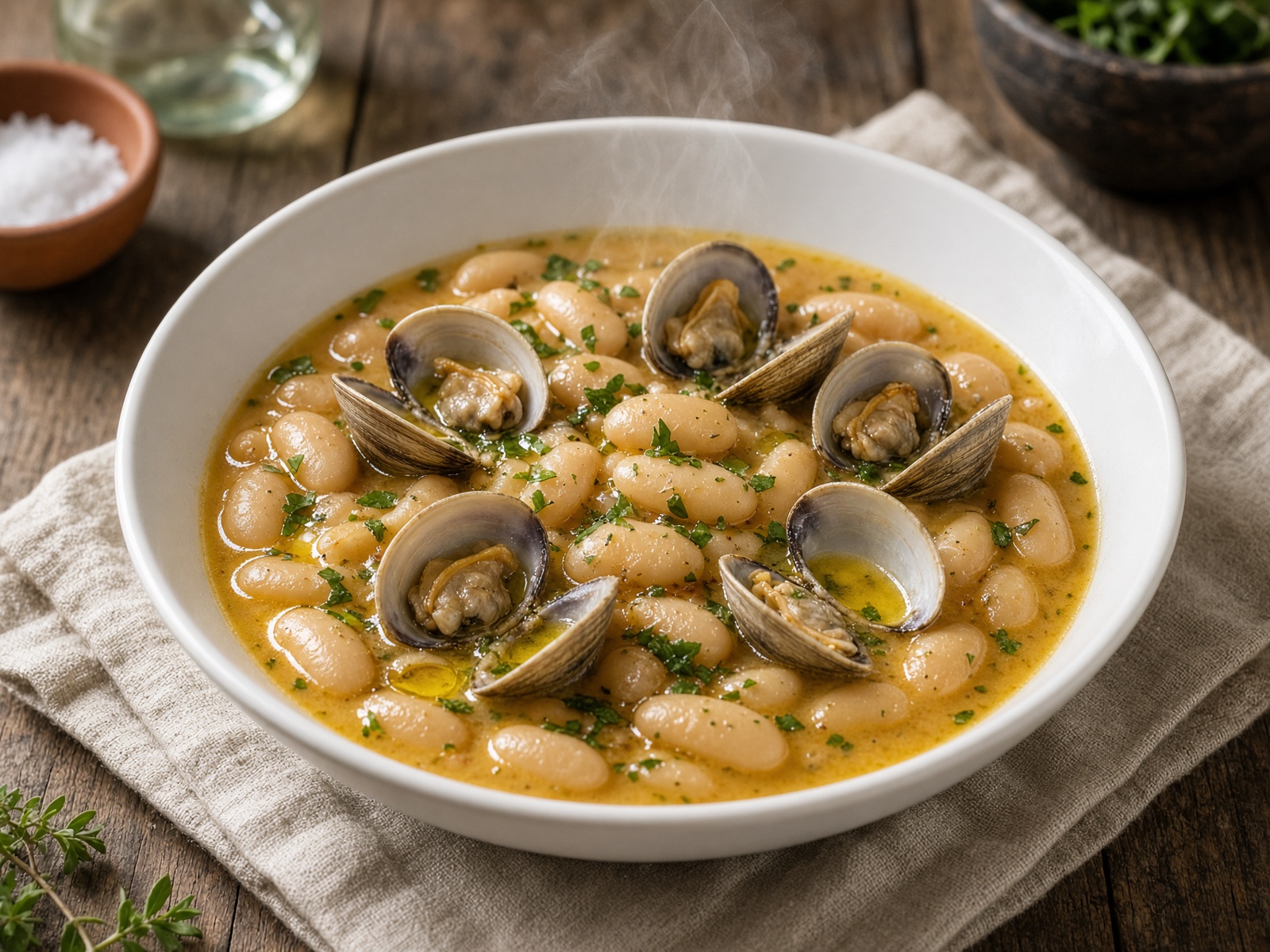
You simmer vast white beans until they are creamy inside and still intact, then open clams in that pot so the liquor seasons the beans. No chorizo, no pork — the sea does the work the sausage does in fabada. The broth should be silk. Bread is not optional.
This is Asturias looking at the Cantabrian, not at the pig. The same fabes de La Granja, the same patience, a different grammar. Stirring is still the enemy; you shake the pot.
Don't salt until the clams have opened — they bring their own. Sidra, poured from a height. Rest five minutes, then ladle deep.
Method
- 01
Drain the soaked beans and put them in a wide pot with half the onion, a clove of garlic, the bay, and enough cold water to cover by 1½ inches. Bring slowly to a tremble — never a hard boil, or you will burst those beans. Cook uncovered, shaking the pot now and then rather than stirring, until they are creamy inside and still intact, 1½ to 2 hours. Top up with a splash of cold water if they surface.
- 02
In a skillet, warm the oil and cook the remaining onion and garlic until soft. Stir in the pimentón off the heat, then the saffron and wine. Tip this sofrito into the beans and simmer 10 minutes more. Taste the broth: it should already be something you'd eat with a spoon. Salt very lightly, if at all — the clams are coming.
- 03
Set the purged clams on top of the beans, cover, and cook until the shells open, 4 to 6 minutes. Shake the pot once. Discard any that stay shut. The clam liquor will have seasoned the beans in a way pork never could; that is the point of this pot.
- 04
Rest 5 minutes. Scatter with parsley and a thread of oil. Ladle into deep plates so each one gets beans, clams, and plenty of that silk. Sidra, poured from a height, as in the rest of Asturias. Bread for the broth, and do not apologize for it.