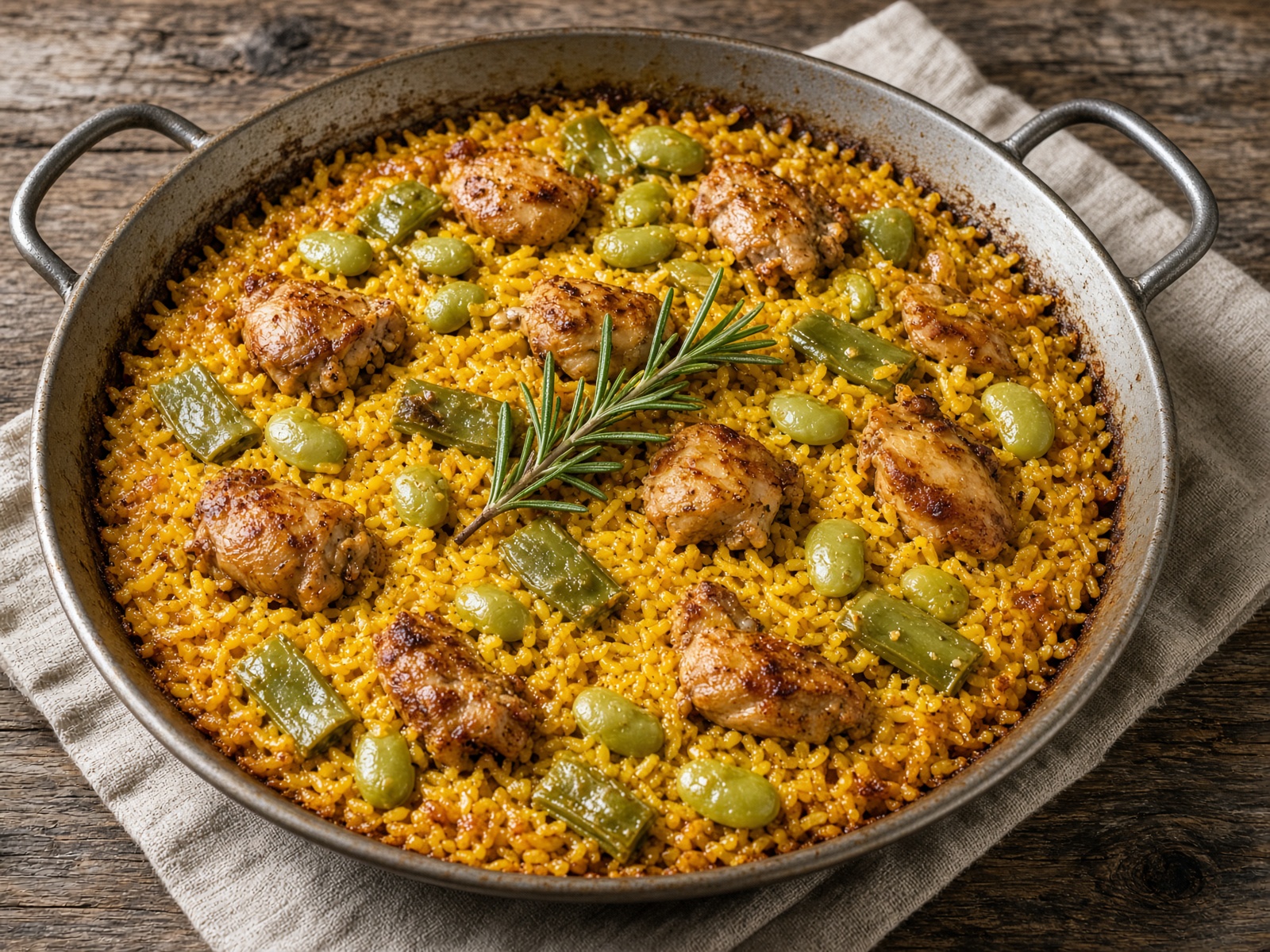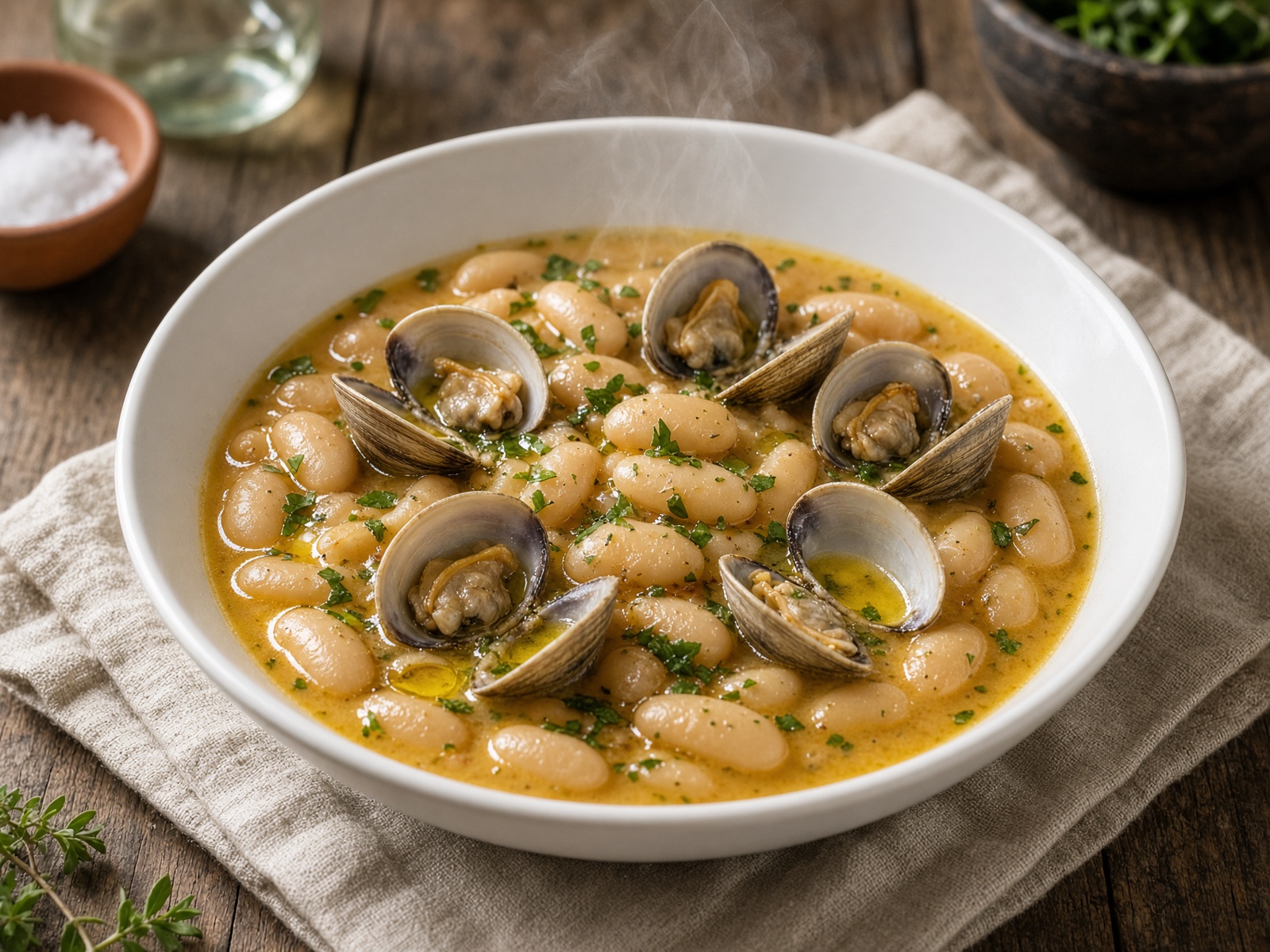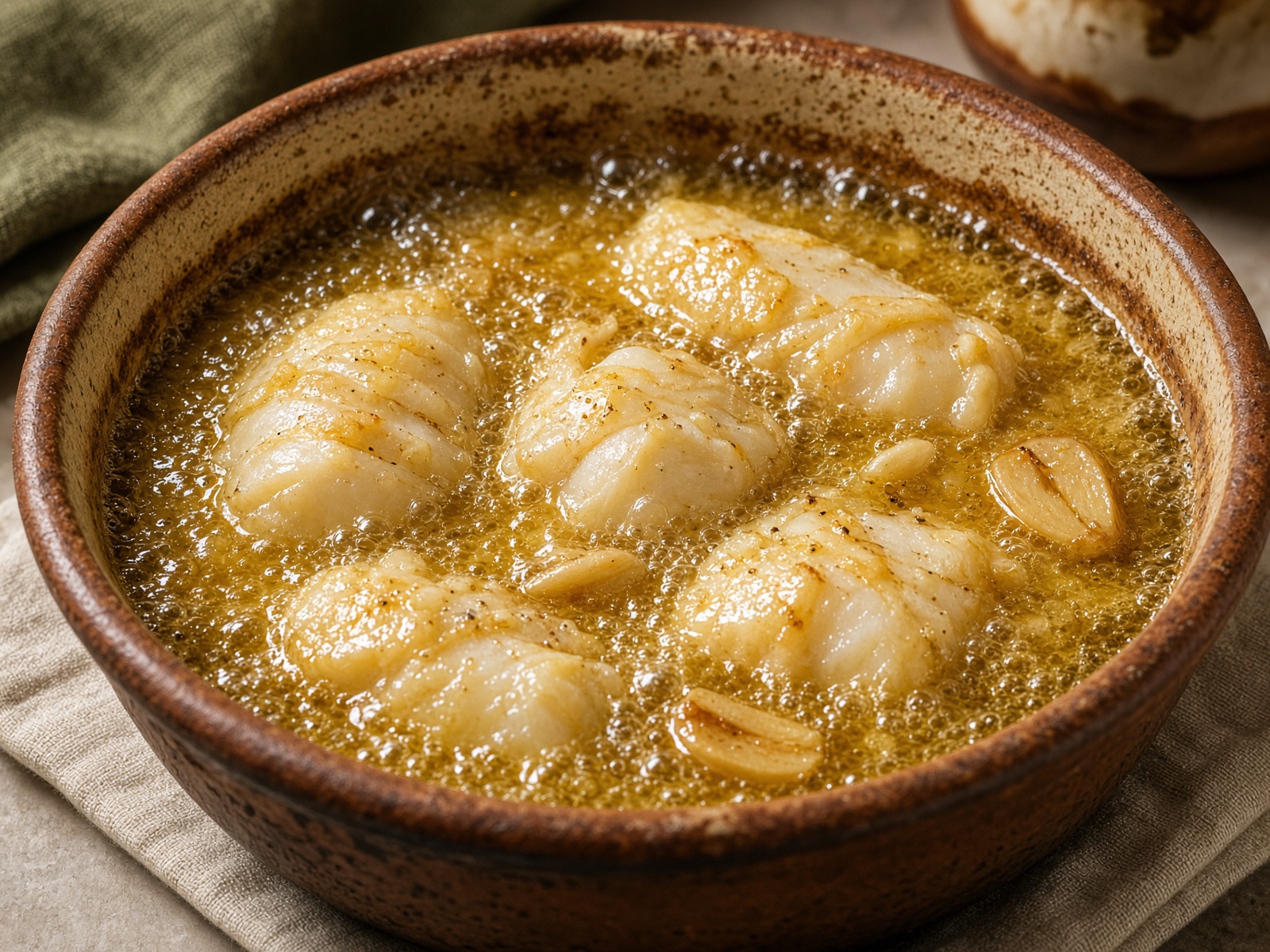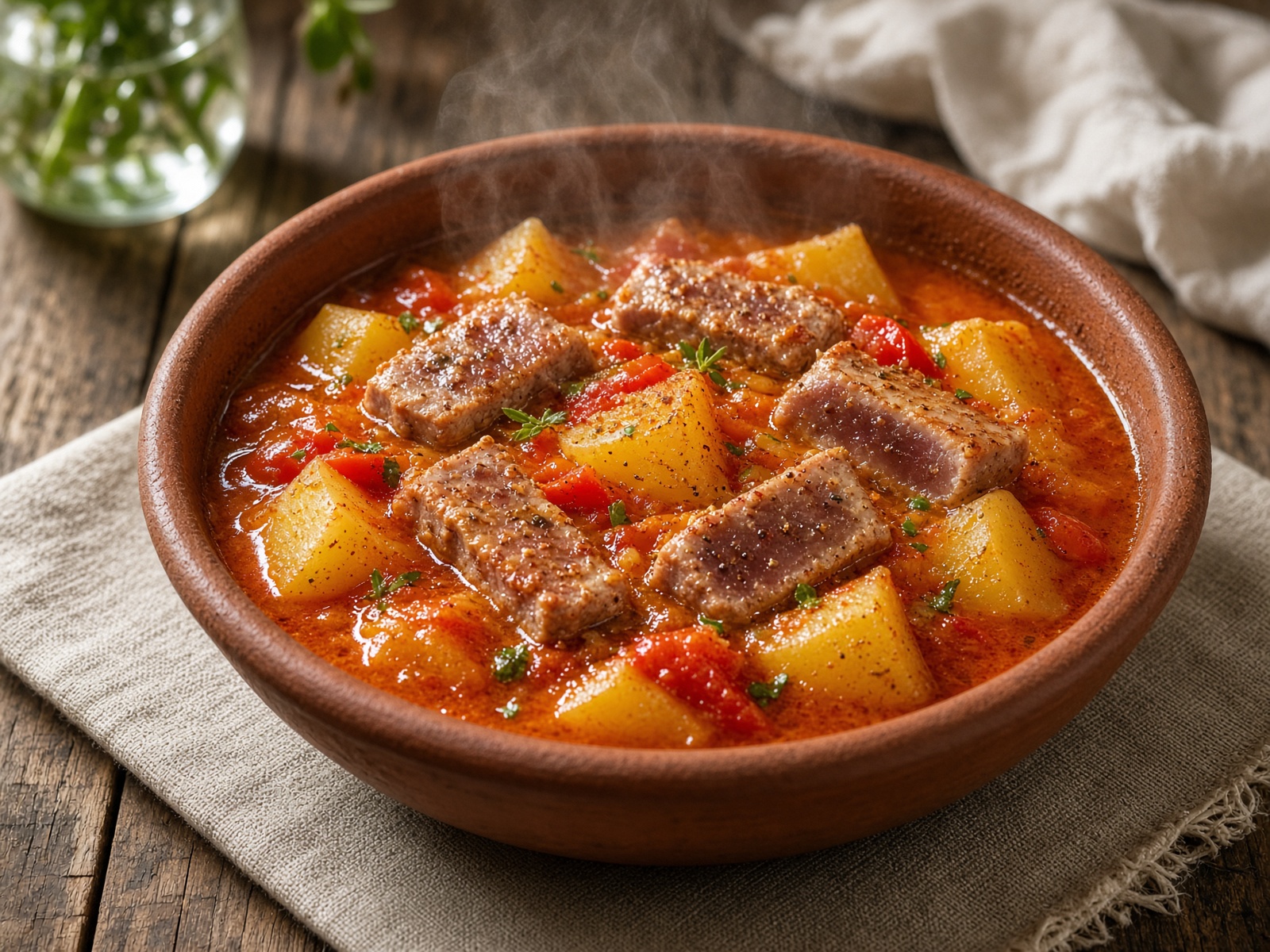
You stew potatoes with peppers and onion until they are almost soup, then slide in tuna at the last minute so it stays a steak, not a flake. The broth should be paprika-red and taste of the boat. Bread for the liquor. This is fishermen's food that never needed a restaurant.
Marmitako is the pot of the Basque tuna boats — the marmita, the kettle on the deck. Bonito of the Bay of Biscay, potatoes, choricero pepper. No pork, no cream. The fish goes in off the fire, or it will dry.
Don't walk away once the tuna is in. A few minutes, lid on, rest. Txakoli, the prickly white of the same coast. Serve from the pot.
Method
- 01
Peel the potatoes and break them into chunks with a knife, twisting as you cut — the ragged faces release starch, which will thicken the stew. If you cube them neatly they stay polite and the broth stays thin. Salt the tuna lightly and keep it cold; it goes in at the end, not now.
- 02
Warm the oil in a wide pot and cook the onion, garlic, and bell peppers until they are soft and sweet, 10 minutes. Stir in the scraped choricero flesh or the pimentón, off the heat for a moment so the paprika doesn't scorch. Return to the stove, add the potatoes, and turn them in that red oil until they are coated and smelling of pepper.
- 03
Pour in the wine and let it bubble up. Add the stock and bay, and simmer until the potatoes are tender and the broth has turned slightly creamy from their starch, 20 to 25 minutes. Taste for salt. It should already be a stew you'd eat without the fish — that is the test.
- 04
Lay the tuna on the potatoes, cover, and take the pot off the heat, or keep it at the lowest tremble, 3 to 5 minutes. The fish should be just opaque, still juicy. Rest 5 minutes, scatter with parsley, and serve from the pot. Bread for the liquor. If the tuna flakes to nothing, you left it on too long; next time, trust the lid.