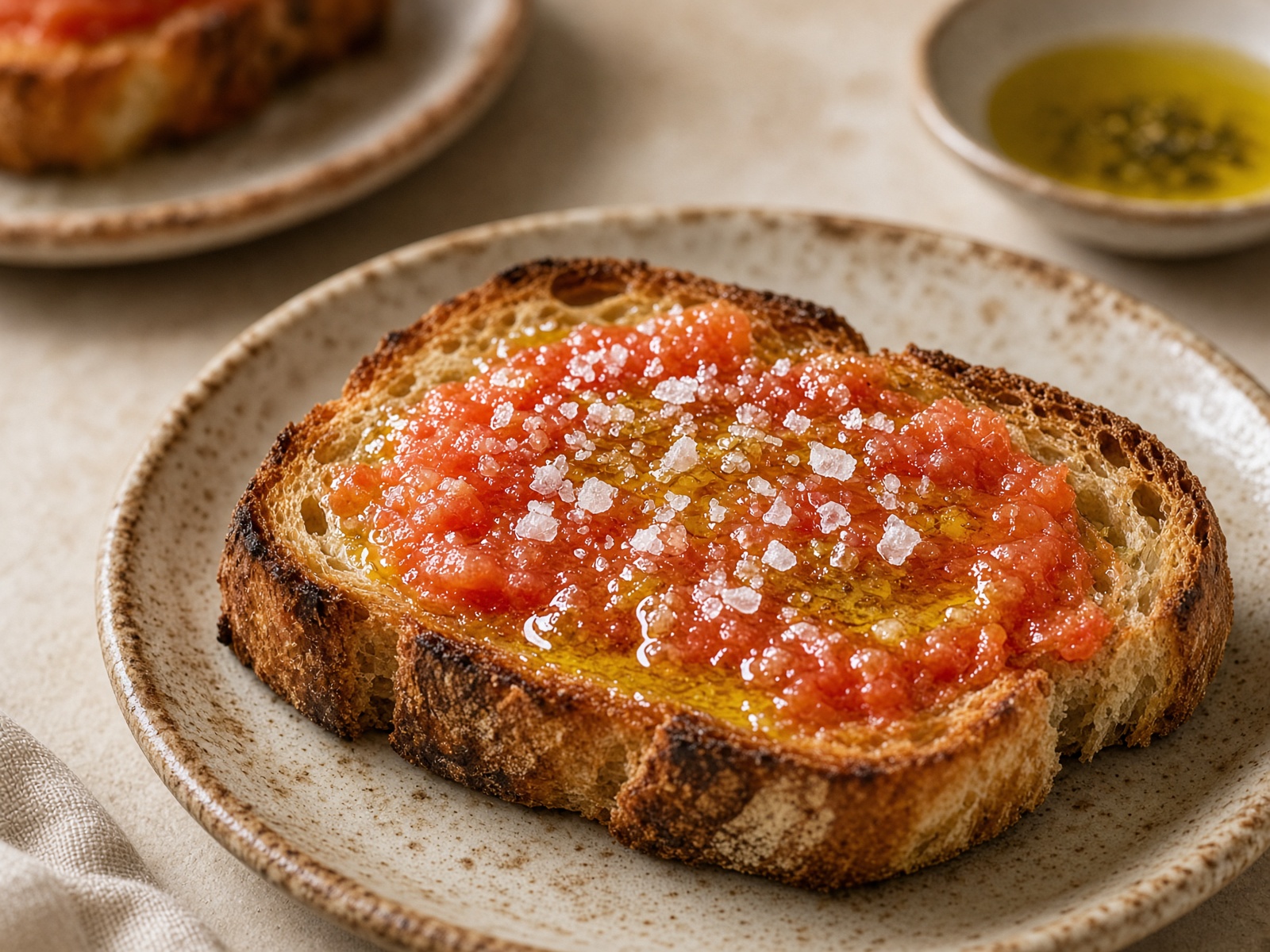
Yesterday's bread, redeemed: you toast a thick slice until the surface is crisp and the crumb still soft, then scrub it with garlic, a ripe tomato, and oil poured without counting. The plate comes stained red. Salt crunches. You eat it before it cools.
Catalonia's pa amb tomàquet is breakfast, tapa, and the foundation under a slice of jamón. It is not a recipe so much as a habit of the house — bread that would otherwise stale, tomatoes that must actually taste of tomato, oil from the same cupboard as everything else.
A ghost of garlic, not a coating. Work the tomato into the crumb until the slice is soaked, not topped. Cava if you are sitting down.
Method
- 01
Toast the bread over a flame or under a hot grill until the surface is crisp and the crumb inside is still soft — you want contrast, not a rusk. A thick ¾-inch slice of rustic country bread is what you're after; supermarket sandwich bread will collapse. Work quickly so the toast stays warm for the rubbing that follows.
- 02
Rub each slice once with the cut face of the garlic clove. You want a ghost of garlic, not a coating — one pass is enough, and the heat of the bread will pull the oil from the clove. Don't be heavy-handed here; you'll taste it even when you can barely see it.
- 03
Halve the tomatoes across their equator and scrub the cut faces firmly into the bread until the crumb is stained red and thoroughly soaked. This is work, not a garnish; press and drag until the slice drinks the tomato. Discard the skins when they're spent. If your tomatoes don't actually taste of tomato, wait for better ones.
- 04
Anoint each slice generously with extra-virgin olive oil — pour without counting, as they do in Catalonia — and finish with a crunch of flaky salt. Eat them before they cool; a cold pan con tomate is just wet bread. The plate should be stained red. That's how you know you did it right.