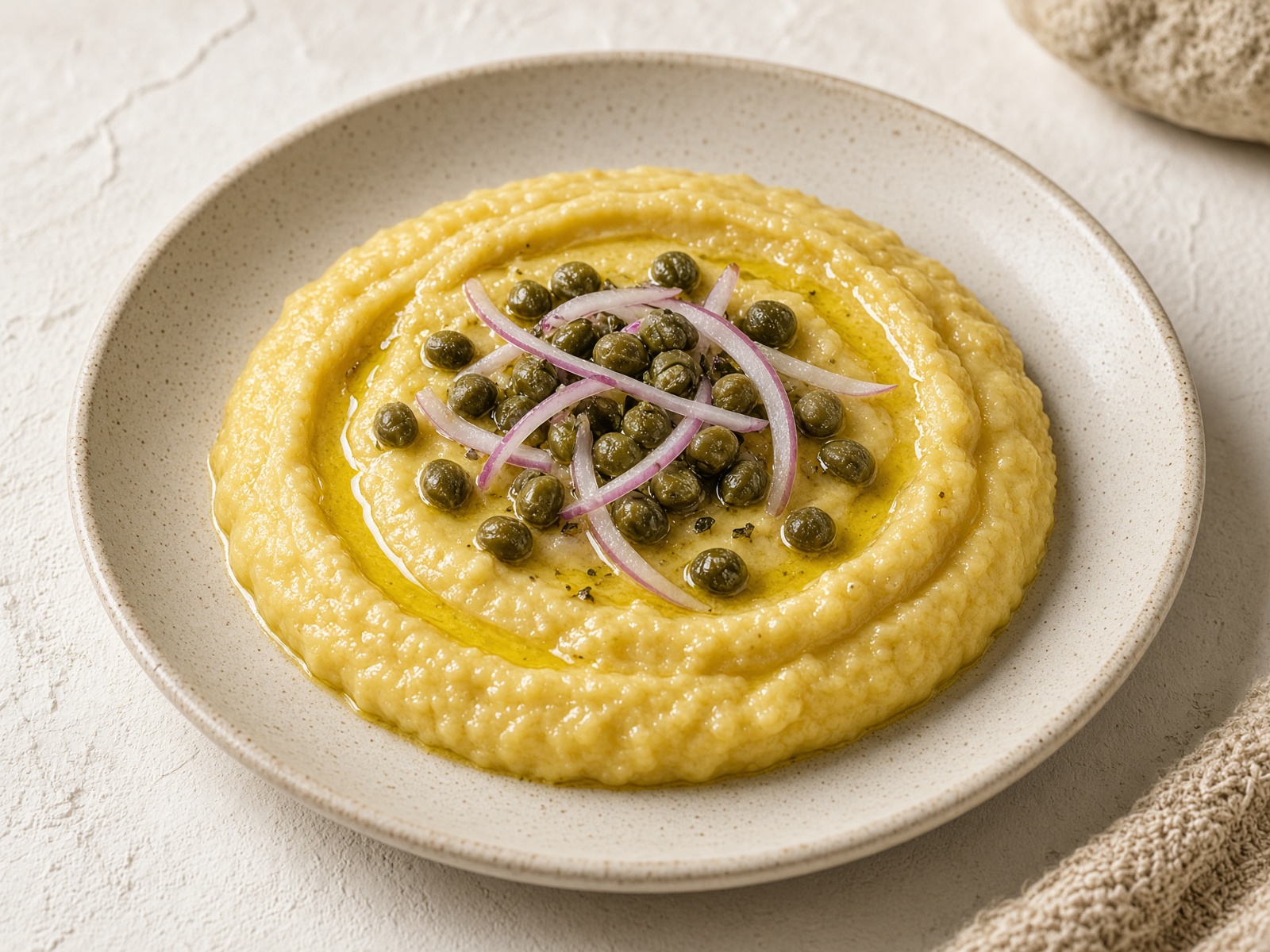
You simmer yellow split peas to a velvet purée that falls from the spoon in ribbons, tasting of earth and lemon. Then you make a well and fill it with a lake of oil, capers and raw onion over the top. It costs almost nothing and you will scrape the plate.
This is Santorini on a plate — mezze and main, Lenten and festive. True fava of the island is a grass pea grown in volcanic ash; a common yellow split pea will still make an honest bowl.
Beat in the oil and lemon while it is hot, then serve it warm or at room temperature, never fridge-cold, which dulls the earthiness. Bread for dragging through that oil is half the dish.
Method
- 01
Put the rinsed split peas, the chopped onion, and the bay leaf in a pot, and cover with water by 1½ inches. Bring it to a simmer — not a rolling boil, which will make the peas catch and scorch. Skim off the foam that rises in the first few minutes; it looks unappetizing and you don't want it in the purée. Settle in: this is a quiet, stirring sort of dish.
- 02
Cook gently, stirring now and then so nothing sticks to the bottom, until the peas collapse into a thick, velvet purée, 35 to 45 minutes. Add a splash of water if they begin to catch — they will, toward the end, as the liquid disappears. You'll know they're ready when a spoon dragged through leaves a trail that slowly closes. Fish out the bay leaf and discard it; its work is done.
- 03
Beat in the olive oil, the juice of the lemon, and a good pinch of salt, keeping at it until the fava is glossy and falls from the spoon in slow ribbons — that is the texture you want. Taste it: it should taste of earth and lemon, not of plain peas. It will thicken as it cools, so err on the side of slightly loose while it's hot.
- 04
Spoon the fava onto a plate, make a well in the center with the back of a spoon, and fill that well with olive oil — a lake of it, not a timid drizzle. Scatter the rinsed capers and the sliced red onion over the top. Serve it warm or at room temperature, never fridge-cold, which dulls the earthiness. Set bread beside it for dragging through that oil; that is half the dish.