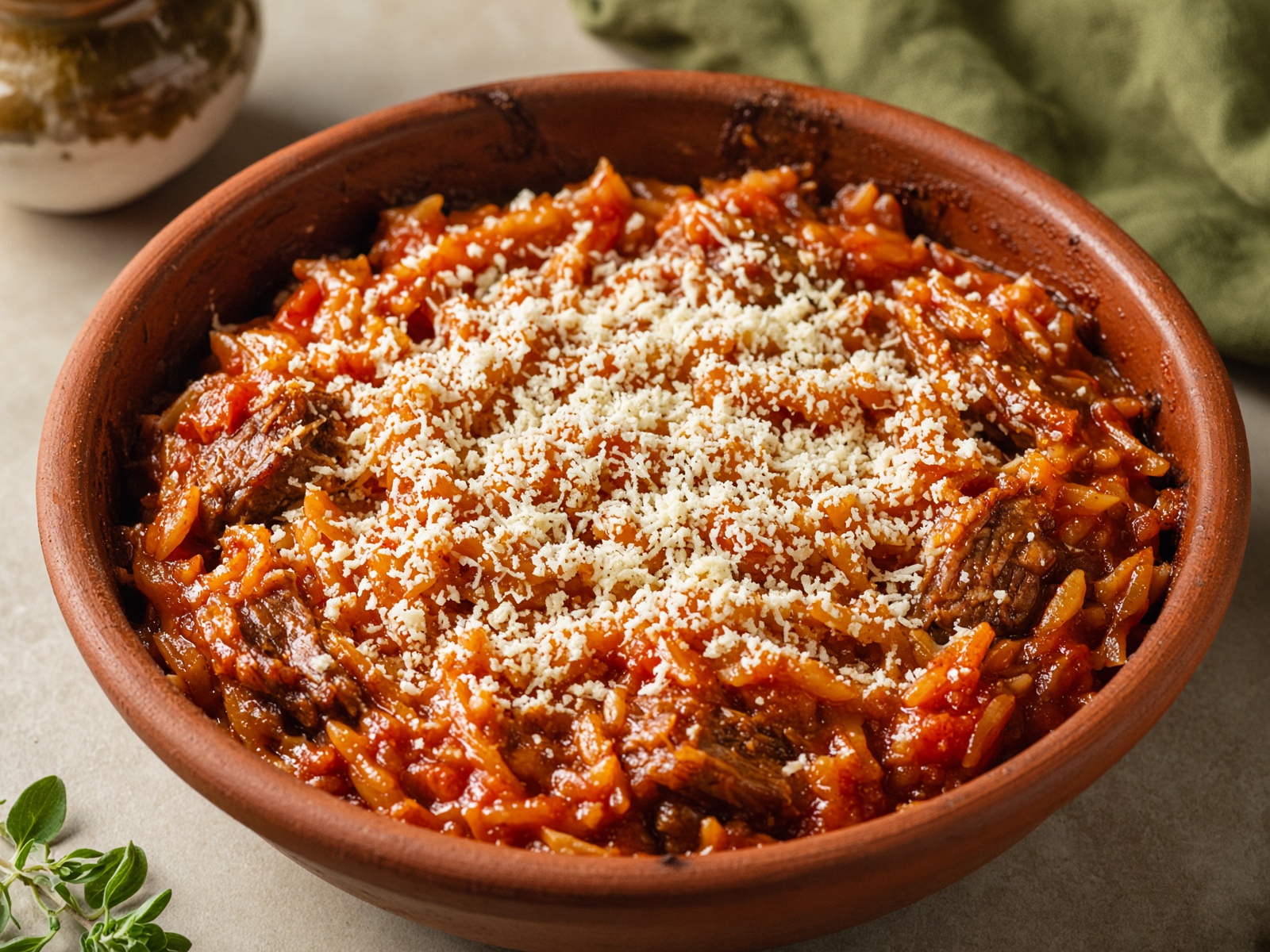
You bake lamb and orzo together in tomato until the pasta drinks the juices and the edges catch. Cinnamon in the sauce, a snowfall of kefalotyri at the table — that last instruction is the one that makes it Greek. A spoon, a piece of bread, and you are done.
Youvetsi is Sunday lunch in a single dish, the house smelling of tomato and spice. Orzo, kritharaki, is the pasta that belongs here: small enough to swell in the sauce, stubborn enough not to collapse.
Stir once so the orzo does not clump. Rest it ten minutes out of the oven. Cheese with a heavy hand — do not be timid.
Method
- 01
Season the lamb generously with salt and pepper. Heat the oil in a heavy casserole and brown the meat in batches — don't crowd the pot, or you'll steam it gray instead of coloring it. You want a deep brown crust on as many sides as you can manage; that color is flavor. Set the browned lamb aside on a plate, leaving the sticky browned bits on the bottom of the pot.
- 02
Cook the onion in the same pot until soft, scraping up those browned bits as it goes. Add the garlic, then the tomatoes, the cinnamon stick, the cloves, salt, and pepper. Return the lamb and any juices on the plate, pour in half the hot stock, cover, and bake at 340°F for 1 hour, until the lamb is nearly tender. A fork should meet only a little resistance, and the house will smell of cinnamon and tomato.
- 03
Stir in the orzo and the remaining stock, making sure the pasta is submerged. Return the pot to the oven, uncovered this time, for 25 to 30 minutes, stirring once halfway through so the orzo doesn't clump on the bottom. You want the pasta cooked and the surface caught in places — those browned, sticky edges are the best bites. If it looks dry before the orzo is tender, add a splash more stock.
- 04
Rest the pot 10 minutes out of the oven — the orzo will finish swelling and the juices will thicken. Fish out the cinnamon stick and the cloves; they've given what they had. Serve with a heavy hand of kefalotyri over each bowl: that last snowfall of cheese is the instruction that makes it Greek, and it should not be timid. A spoon, a piece of bread, and you are done.