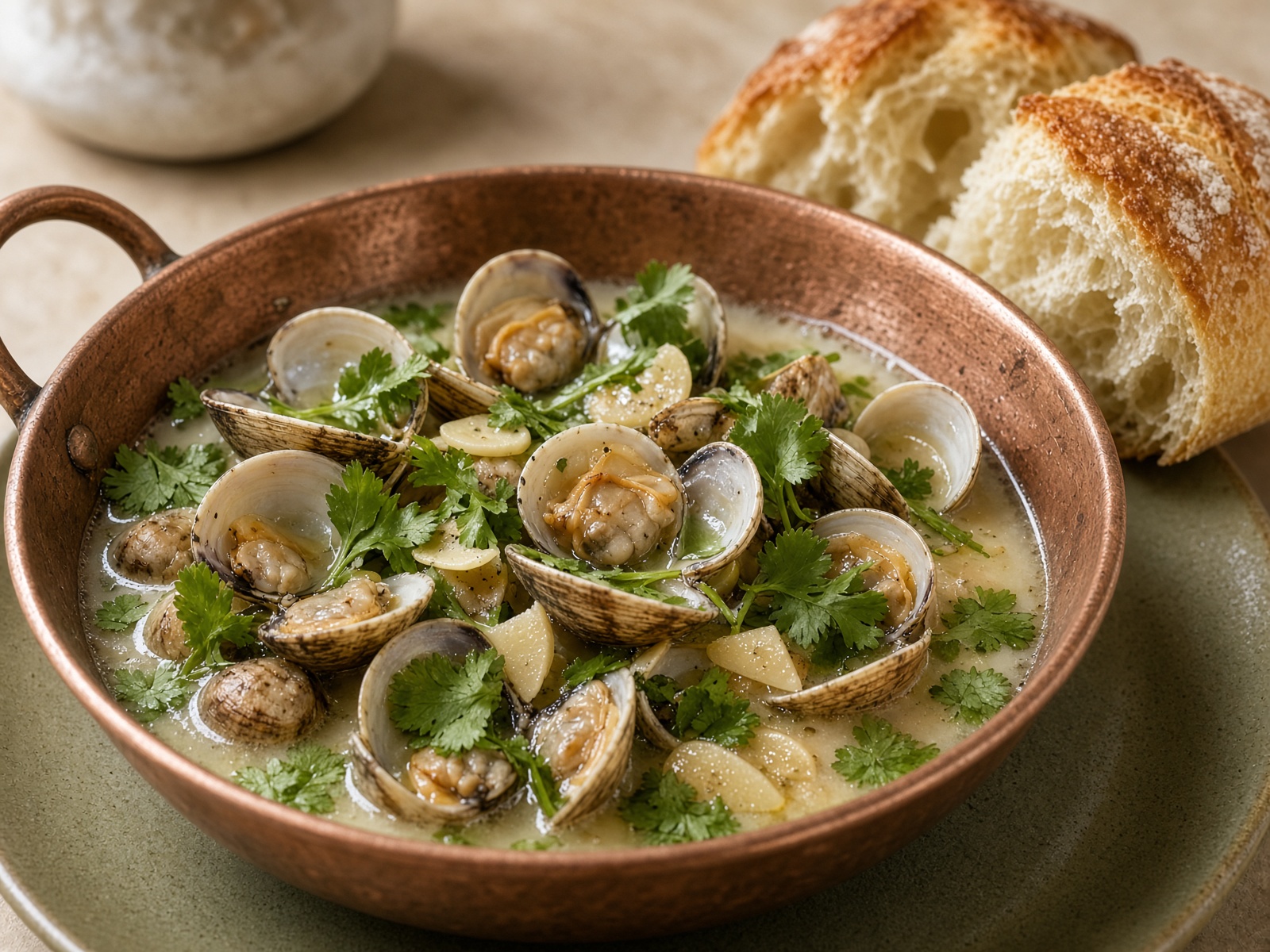
You will fight over the broth. Small clams opened in oil and garlic, a fist of cilantro, a squeeze of lemon, a splash of white wine — and then the liquor, which is the prize, which the bread is for. The shells are almost an excuse. Carry the pan to the table still hissing.
Lisbon named this for a poet with a reputation for appetite, but the dish is the Tagus talking: estuary clams, garlic warmed until fragrant, cilantro thrown in at the end. It is a reflex of the city, not a performance.
Warm the garlic until it smells of the sea, never until it browns. Cover until the shells open, discard the stubborn, and let everyone mop. Whoever takes the last of the liquor with bread has understood the point.
Method
- 01
Warm the olive oil in a wide pan over medium heat and add the sliced garlic and a pinch of chili flakes. You want fragrance, not color — the garlic should turn creamy and smell of the sea before it ever thinks of browning. Thirty seconds, perhaps a minute. If it starts to color, pull the pan off the heat at once; bitter garlic will spoil the whole dish.
- 02
Tip in the purged clams and the white wine — they should hiss. Cover the pan and cook 4 to 6 minutes, shaking once or twice, until the shells have opened. The liquor in the pan should smell of garlic and estuary. Discard any clams that stay stubbornly shut; they were never going to open.
- 03
Take the pan off the heat and scatter over a generous fist of cilantro, then the lemon juice. Stir once, just enough to wilt the herbs into the liquor — you want them bright, not cooked to mud. Taste a spoonful of the broth. It should be briny, garlicky, and sharp; a pinch more salt if it isn't.
- 04
Carry the pan straight to the table — this is not a dish that waits on plates. Set down a loaf of good bread and let everyone fish for clams and mop the liquor. Whoever takes the last of the broth with a crust has understood the point. Have napkins ready; garlic oil finds everything.