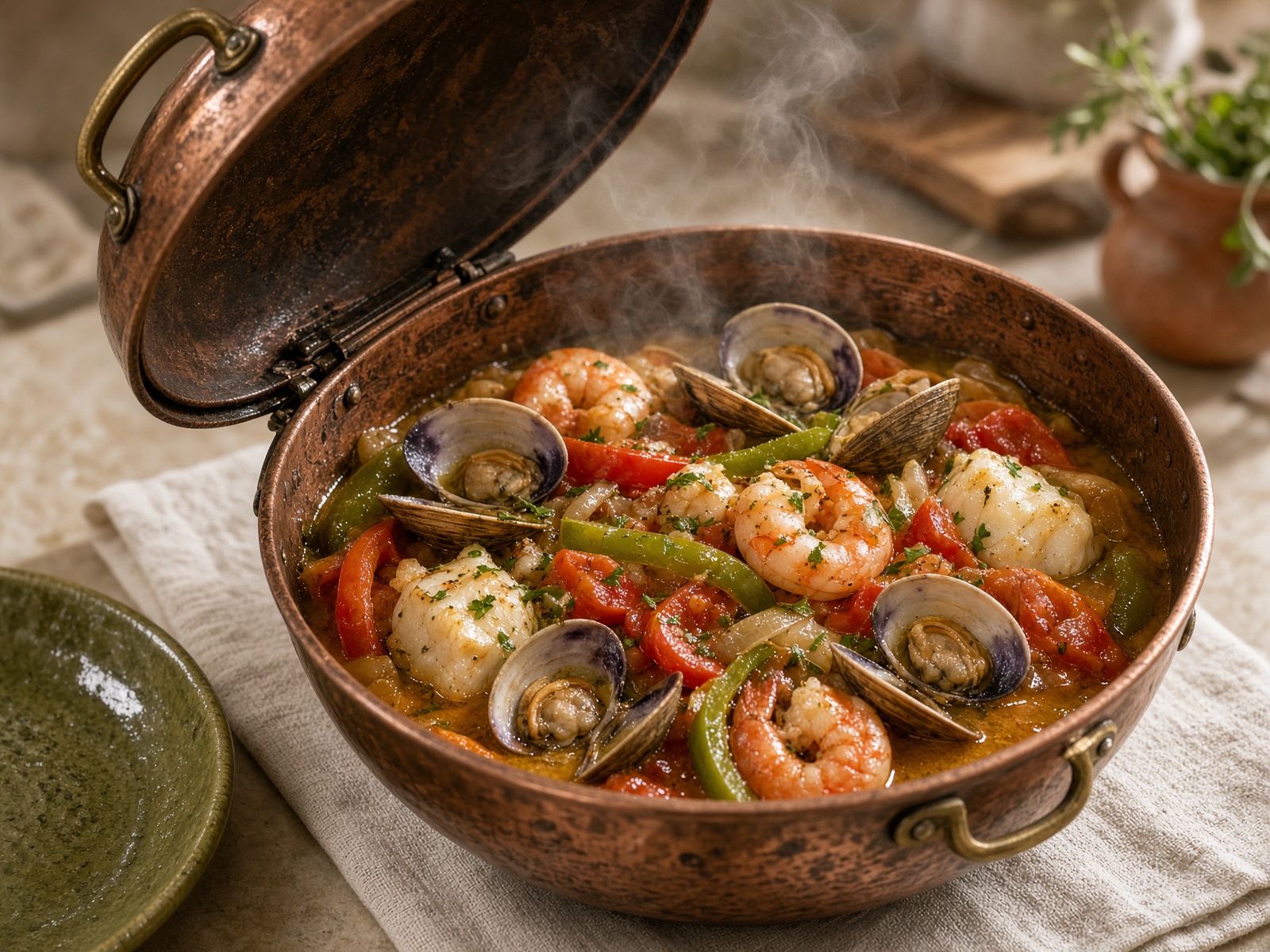
You open it at the table, so the steam is the first course: clams, shrimp, fish, peppers, tomato, wine, cilantro, all clamped inside a hinged copper vessel that is both pan and lid. Bread for the liquor. You do not peek while it cooks, however much you want to.
The cataplana is Algarve work — hammered by coppersmiths, closed over whatever the boats brought. Portugal looks west, but the Algarve looks south as well. The seafood is the catch; the method is the clamp.
Fifteen or twenty minutes, lid shut. Cilantro at the end, never cooked to mud. Discard the clams that stayed shut, and eat while the pan is still murmuring.
Method
- 01
Warm the olive oil in the cataplana — or a heavy pan with a tight lid, if copper is not in your life — and cook the onion, pepper, and garlic until they soften and smell sweet. Add the chopped tomatoes and the bay leaf and let them collapse into a rough sauce. This is the bed. Don't rush it; watery tomatoes need a few minutes to thicken.
- 02
Lay the chunks of fish on the vegetables, then the clams and the shrimp. Pour in the white wine and scatter over most of the cilantro, saving a handful for the end. Nestle everything so it sits in a single, slightly crowded layer. The steam will do the rest; you are packing a vessel, not stirring a stew.
- 03
Clamp the lid shut and cook over medium heat for 15 to 20 minutes — do not peek, however much you want to. The cataplana is both pan and lid, and every lift of it lets the steam escape, which is the cooking. You will hear the clams rattle when they open; that is your cue, not the clock alone.
- 04
Carry the closed cataplana to the table and open it there, so the steam is the first course. Scatter the remaining cilantro over the seafood — never cooked to mud. Set down bread for the liquor, and let people serve themselves from the pan. Discard any clams that stayed shut, and eat while it is still murmuring.