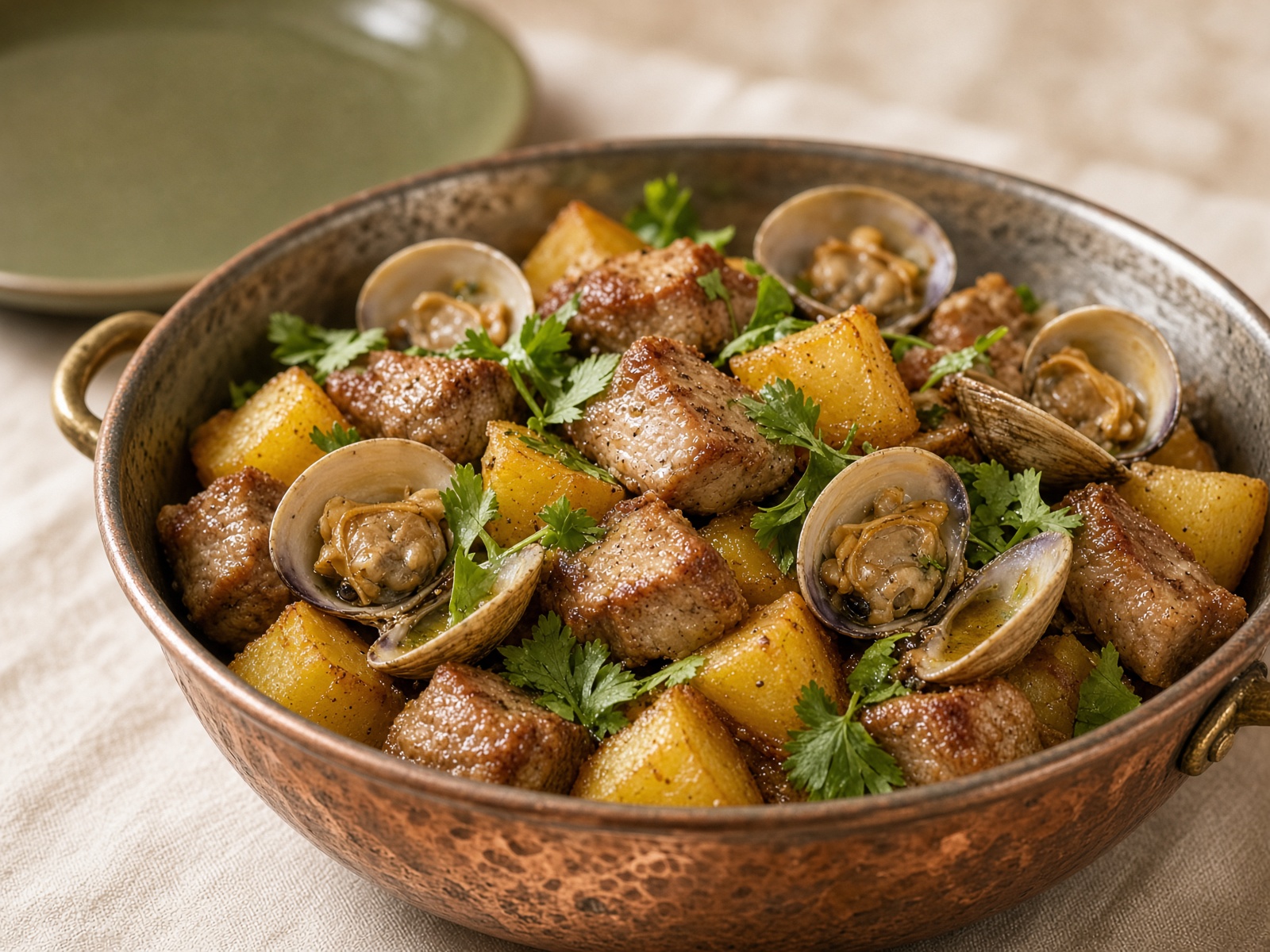
You get pork and clams in the same pot, and fried potatoes besides — the meat massaged with massa de pimentão until it is stained red, the clams opened in that paprika liquor, cilantro thrown over the lot. It should not make sense. It does, and you will want bread for the sauce.
The name says Alentejo; the clams suggest the coast. Cooks wanted clean pork and kept the clams they already had. À alentejana named the meat, not the map. The marriage holds.
Marinate the pork until the pepper paste has gone in, not sat on it. Add the clams at the end, cover until they open, and be generous with the cilantro. Every plate needs pork, clam, potato, and some of that liquor.
Method
- 01
Cut the pork into cubes if you haven't already, and toss it with the massa de pimentão, the crushed garlic, the bay leaf, and the white wine. Cover and leave it at least 2 hours — overnight is better, in the refrigerator. The red pepper paste must go into the meat, not sit on it. When you come back, the pork should be stained and smelling of paprika and garlic.
- 02
Lift the pork from the marinade, reserving every drop of that liquor. Brown the cubes in olive oil in a wide pot, in batches so they sear rather than steam. When they have taken color, pour in the marinade, scrape the bottom, and simmer until the pork is tender, about 25 minutes. The sauce should reduce to something spoonable, not watery.
- 03
While the pork simmers, fry the cubed potatoes in olive oil until they are gold on all sides and tender within. Drain them on paper and salt them while they are hot. Keep them warm. You fry them separately so they stay crisp at the edges; if you boiled them in the pot they would go to mush, and this dish needs the crunch.
- 04
Add the purged clams and the fried potatoes to the pork, stir once, and cover the pot. Cook until the clams open, 4 to 6 minutes. Throw the cilantro over the lot — a great handful, not a sprinkle. Serve from the pot, making sure each plate gets pork, clam, potato, and some of that paprika liquor.