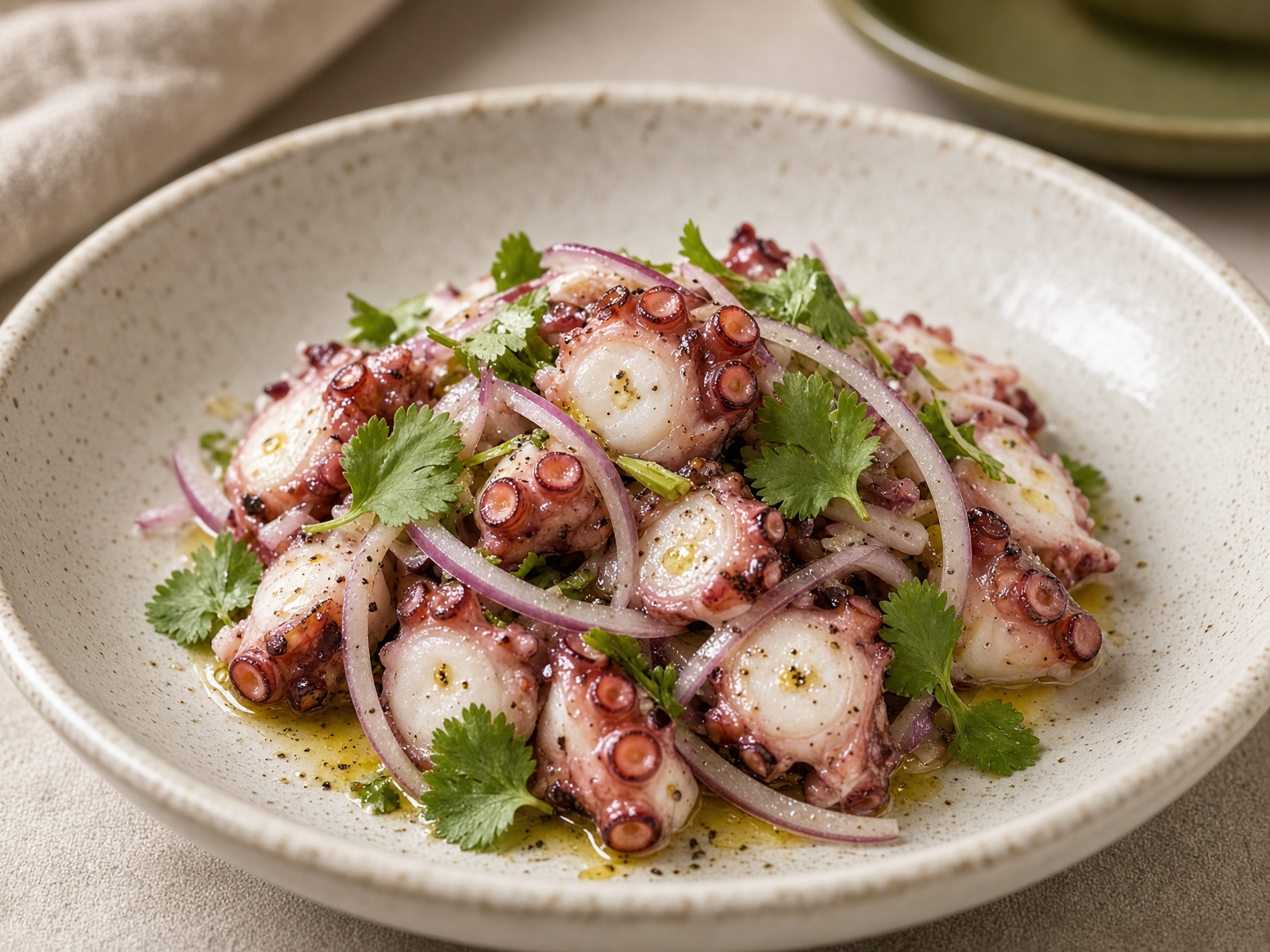
You want octopus that yields — simmered until a knife meets no argument — then dressed still warm with paper-thin onion, cilantro, vinegar, and a great deal of oil. It should taste of the Atlantic and of patience. It improves overnight, which is a kindness on a busy day.
Octopus is coastal work: traps off the Algarve, pots along the west, the boiled tentacles of every festa. The salad is how a whole animal becomes a plate you can hold. It is oil and onion, not a ceviche.
Dress it while the flesh is still warm so the seasoning enters. Rest it. Serve at room temperature, never cold from the fridge, which makes the oil seize. Put more oil on the table; someone will want it.
Method
- 01
Put the octopus in a pot with the garlic and the bay leaf, cover with water, and bring it to a steady simmer — not a gallop. Cook 40 to 50 minutes, until a knife slides into the thickest tentacle with no argument. Lift it out and let it cool until you can handle it. Don't plunge it into ice; you want it still warm for the dressing.
- 02
Cut the octopus into bite-size pieces — not scraps, not steaks. The tentacles into thick coins, the body into strips. You should see the pattern of the suckers on some of them; that is part of the pleasure. Work on a board that can take a little moisture, and keep the pieces together in a bowl while you dress.
- 03
Toss the warm octopus with the paper-thin onion, the diced red pepper, a generous handful of cilantro, the olive oil, the vinegar, and salt. Be generous with the oil — this is a salad of the Atlantic, not a diet plate. Taste: you want onion bite, vinegar sharpness, and a lot of fruit from the oil. Add more of whatever is shy.
- 04
Let the salad rest at least 30 minutes so the vinegar can enter the flesh. It improves overnight, covered, in a cool kitchen — the onion softens and the oil turns silky. Serve it at room temperature, never cold from the fridge, which makes the oil seize and the octopus sulk. Put more oil on the table; someone will want it.